TB-500 Loading Phase: How the Protocol Works Week by Week
Your provider sets a loading phase to bring TB-500 to working levels, then shifts you to maintenance.
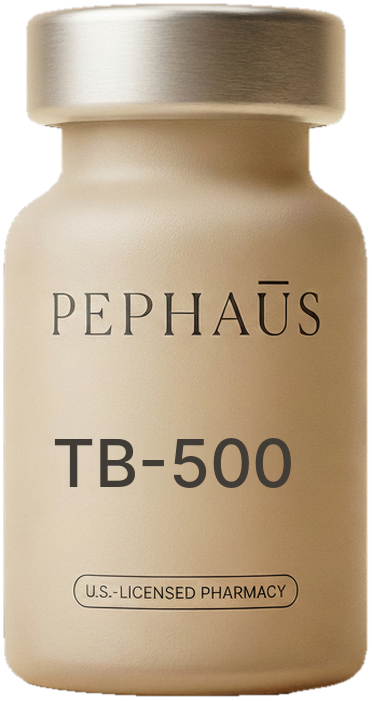
TB-500 providers start you with a loading phase: a few weeks of more frequent smaller shots that bring the peptide to working levels before you shift to a maintenance schedule. Your provider sets the exact protocol after reviewing your health history and training load, and they adjust as you go.
Is this you?
Is this you?
You just got prescribed TB-500 and the provider mentioned a loading phase but you want to know what that looks like week to week. You train regularly and recovery takes longer than it used to. You can get to the gym but the next two days remind you that you did. You want to support your body's natural repair process but you are not sure how the dosing works. You have heard people talk about loading and maintenance but nobody explains what changes or when. If you nodded at two or three of those, keep reading.
TB-500 injections, prescribed online from $152/mo
A quick at home shot. Provider visit and shipping included. Nothing charged unless you are prescribed.
What a loading phase does
TB-500 is a synthetic version of the active region of thymosin beta-4, a protein your body makes that plays a role in cell movement and tissue repair. A loading phase brings the peptide to a level where your body can use it, then maintenance keeps it there. Most of the research so far comes from lab and animal studies, which is why a provider reviews your health history and sets your dose.
The provider decides whether you need a loading phase and how long it runs. Some people start with one, some skip it and go straight to maintenance. It depends on your training schedule and what the provider sees in your intake. A common loading phase runs two to four weeks with injections two to four times a week, then you drop to once or twice a week for maintenance. The provider adjusts if you need more or less.
Week by week: what the schedule looks like
Week one and two, you inject the amount the provider set, two to four times a week on the days they picked. The shots are small, subcutaneous, in the belly or thigh. You rotate sites so you are not hitting the same spot twice in a row. Some people notice steadier energy by the end of week two, others notice nothing yet. Both are fine, and the provider reminds you that the peptide is building whether you feel it or not.
Week three and four, you stay on the same schedule unless the provider adjusts. By now most people report that soreness after training feels less intense and recovery between sessions feels shorter. The provider checks in to see how you are responding and whether the dose needs to change. If you are noticing what you hoped for, you move to maintenance. If not, the provider may extend loading another week or adjust the amount.
Maintenance starts once loading wraps. You drop to one or two injections a week at the dose the provider sets. This phase keeps the peptide at a working level without the frequent shots. Some programs run maintenance for eight to twelve weeks, some longer. The provider tracks how you are doing and adjusts if anything changes. Pairing TB-500 with training, sleep and protein makes the most of what the peptide supports.
Ready when you are. Ten minutes on your phone.
Start my online visitHow the provider sets your protocol
Your provider reviews your health history, current training load and what you want from the peptide. They ask about medications, allergies and whether you have used peptides before. They check whether you compete in a tested sport, because people who do should verify their league allows TB-500 before starting. Then they set your dose, pick your injection days and decide whether you start with loading or go straight to maintenance.
The provider explains what to watch for and when to reach out. They schedule a check in after the first few weeks to see how you are responding. If you notice anything unexpected, you message them before your next dose. If soreness is improving and energy is steadier, you stay on the protocol. If you are not noticing anything by week four, the provider considers adjusting the dose or extending the loading phase.
Injection timing and what to know
You inject TB-500 at the time of day the provider recommends. Some people inject in the morning, some at night. The timing matters less than staying consistent. You do not need to time it around meals or training. The provider walks you through the injection technique during your visit and you can message them if anything feels off.
Each injection takes about a minute once you get used to it. You pinch a fold of skin on your belly or thigh, insert the needle at a shallow angle, push the plunger slowly, and pull out. You apply light pressure with a clean tissue if needed and you are done. Rotating sites prevents soreness. Some people get a small red spot at the injection site that fades in an hour, some get nothing.
Loading phase vs maintenance: what changes
Loading brings TB-500 to a working level quickly. Maintenance keeps it there with fewer shots. During loading you inject more often, which means more supplies and more time managing the protocol. During maintenance you inject once or twice a week, which is easier to fit into a routine. Some people notice a difference between the two phases, others do not. What you notice depends on your training load, sleep, nutrition and how your body responds.
The provider adjusts your protocol based on what you report. If you feel better during loading and then plateau on maintenance, they may tweak the maintenance dose or frequency. If you are still adjusting two months in, they reassess. Recovery happens on a timeline that varies by person, and the provider uses your feedback to dial in what works for you.
Gummies and GLP-1 pills are not the same thing
Peptide gummies and pills were never in the clinical trials. If you swallow a peptide, your stomach breaks it down and about one percent reaches your blood. If you inject it, about 80 percent does. TB-500 is an injectable peptide compounded by a licensed U.S. pharmacy after a provider review. It is not available as a gummy, pill or nasal spray from a licensed pharmacy. Research vials sold online for lab use are not the same as the prescription version and they come with no provider, no testing and no accountability.
What it costs
TB-500 costs $169 a month on the monthly plan, $160 a month on the quarterly plan, and $152 a month if you prepay six months. The provider visit and shipping are included. You are never charged unless the provider prescribes it. You can cancel anytime. BPC-157 follows the same pricing if you want to pair them, and many people do. The provider explains how the two work together during your intake. For more on TB-500 pricing, visit the TB-500 cost page.
LegitScript certified
A licensed U.S. pharmacy vs the grey market
TB-500 compounded by a U.S.-licensed pharmacy is prescribed by a U.S.-licensed physician after reviewing your health history and cleared by your state's board of pharmacy. Research vials sold online as lab reagents are not for human use and they come with no provider, no dosing guidance, no purity testing and no recourse if something goes wrong. Some arrive mislabeled, some underdosed, some contaminated. The provider who prescribes your TB-500 from a licensed pharmacy sets your protocol, tracks your progress and adjusts your dose if needed. The grey market offers none of that.
In October 2026 the FDA granted enforcement discretion letting licensed 503A compounding pharmacies compound TB-500 after the July 2026 advisory committee vote. This is not FDA approval, but it allows pharmacies to compound the peptide legally. The compounded version from a pharmacy is not the same as the research vial you can buy without a prescription online.
FAQ
FAQ
How long does the loading phase last?+
The provider sets the length based on your health history and training load. A common loading phase runs two to four weeks with injections two to four times a week. Some people extend it to six weeks, others skip it and start with maintenance. The provider adjusts based on how you respond.
Can I skip the loading phase?+
Some protocols skip loading and go straight to maintenance dosing. The provider decides whether you need a loading phase after reviewing your intake. If you are not in a hurry and you prefer fewer injections per week, they may start you on maintenance. If you want to notice results sooner, loading gets you there faster.
Do I inject every day during loading?+
Most loading protocols call for two to four injections per week, not daily. The provider sets the schedule based on what the research suggests and how your body is likely to respond. Daily injections are rare and not common in published dosing protocols.
What happens if I miss a dose during loading?+
If you miss a dose, inject as soon as you remember unless it is close to your next scheduled dose. Then skip the missed one and continue on schedule. Message your provider if you miss more than one dose in a row. Missing one dose during loading is not a setback, but missing several can slow the process.
When do people start noticing anything?+
Some people notice steadier energy and shorter recovery times by the end of week two. Others notice nothing until week four or five. The timeline depends on your training load, sleep, nutrition and how your body responds to the peptide. Individual results vary, and the provider reminds you that the peptide is working whether you feel it right away or not.
Can I extend the loading phase if I want faster results?+
The provider decides whether extending loading makes sense. If you are responding well but want to push further, they may add another week or two. If you are not noticing anything by week four, they reassess your dose before extending. More is not always better, and the provider adjusts based on what your body is showing them.
Do I need to cycle off after maintenance?+
Some protocols run maintenance for eight to twelve weeks then pause for a few weeks before restarting. Others stay on maintenance longer. The provider sets the timeline based on your goals and how you are responding. If you compete in a tested sport, check your league's rules first because some ban TB-500 during competition. The provider walks you through the protocol step by step, from loading to maintenance, and they adjust as you go. TB-500 supports the body's natural repair process when paired with training, sleep and protein. For more on how TB-500 works, visit the recovery peptides guide . To see how TB-500 compares to BPC-157, check out BPC-157 for recovery . To start, visit TB-500 injections .
Start your visit from your phone
Ten minutes on your phone. A physician licensed in your state. A box on your porch in 2 to 3 business days.
See if you qualifyYour care team
Every PepHaus visit is reviewed by a licensed physician from the Wasef Health Group provider network. A doctor reads your intake, decides if treatment fits, and sets your plan.
Meet the physiciansThis article is educational and is not medical advice. Compounded medications are not FDA-approved. Treatment requires evaluation by a licensed provider.