TB-500 for Recovery: How It Supports Your Body's Repair Process
TB-500 supports recovery from training and pairs with sleep and protein for steadier bounce-back.
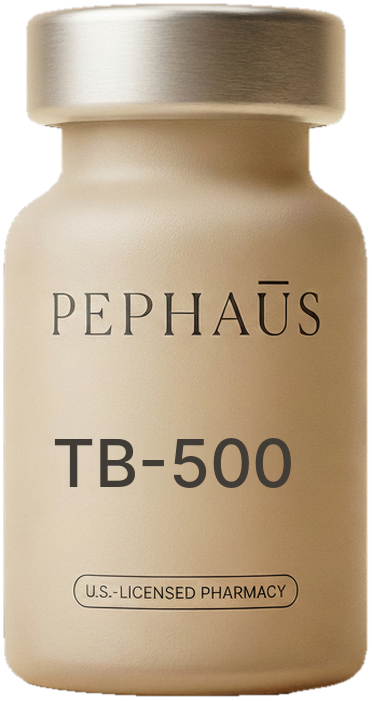
TB-500 supports recovery from training and everyday activity by working with your body's natural repair process. Most people using it notice steadier bounce-back between workouts, and many pair it with training, sleep and protein for the best results.
Is this you?
Is this you?
You push through workouts but the bounce-back takes longer than it used to. You wake up stiff from yesterday's session. Rest days help but not as much as they once did. You are consistent with training and protein but recovery feels like the bottleneck now. You have heard people talk about peptides for recovery and want to know what TB-500 actually does. If you nodded at two or three of those, keep reading.
TB-500 injections, prescribed online from $152/mo
A quick at home shot. Provider visit and shipping included. Nothing charged unless you are prescribed.
What TB-500 does for recovery
TB-500 is a synthetic version of the active region of thymosin beta-4, a protein your body makes that is involved in cell movement and tissue repair. Your body makes less of it with age. TB-500 is compounded by a U.S.-licensed pharmacy after a provider review and prescribed by a U.S.-licensed physician, and you inject it a few times a week on the schedule your provider sets.
Most of the published research on TB-500 comes from lab and animal studies, which is why a provider reviews your health history and sets your dose. The research looked at how it supports tissue repair and cell movement, and in those studies TB-500 was linked to the body's repair process at the cellular level. Human research is early, so providers set doses conservatively and adjust based on how you respond.
People using TB-500 for recovery report steadier bounce-back between sessions, less next-day stiffness, and feeling ready to train again sooner. Many pair it with BPC-157, another recovery peptide, and the two work through different pathways. TB-500 stays systemic, meaning it circulates and supports repair throughout the body, while BPC-157 works more locally. Providers set the dose and timing for both when people use them together.
How a provider sets your TB-500 protocol
Your provider reviews your health history, training load and goals, then sets your starting dose and schedule. Most protocols run a few small injections per week, and the provider adjusts based on how you respond over the first month. Some protocols start with a loading phase at a higher frequency, then step down to a maintenance schedule once levels build.
The provider checks in after the first few weeks to see how recovery feels, whether you notice less stiffness, and how the injections are going. If progress is steady, the dose stays the same. If recovery is not improving as expected, the provider adjusts the frequency or reviews training load and sleep, since TB-500 pairs with those instead of replacing them.
Tested athletes should check their league's prohibited list first, since TB-500 appears on some. The provider can confirm whether it is allowed in your sport.
Ready when you are. Ten minutes on your phone.
Start my online visitTiming TB-500 around training
TB-500 does not need to be timed around your workout the way a pre-workout does. Most people inject on set days each week, often in the evening, and let it work systemically over the days between. Some people inject the day after a hard session, while others spread injections evenly across the week. The provider sets the schedule based on training frequency and recovery goals.
Injection technique is subcutaneous, into the fatty tissue of the abdomen or thigh. The provider or their care team teaches the technique, and you rotate sites each time to avoid irritation. Each injection takes about a minute once you have done it a few times.
What the first month looks like
Most people do not notice anything in the first week. By week two or three, the most common report is waking up less stiff and feeling ready to train again a bit sooner. Some people notice steadier energy during sessions, and others report that rest days feel more productive, like the body is actually rebuilding instead of just catching up.
Side effects are rare, and when they happen the provider adjusts. The most common is mild soreness at the injection site, which clears in a day or two. A few people report mild fatigue in the first week, and that usually resolves as the body adjusts. If side effects last, the provider lowers the dose or pauses to reassess.
By the end of the first month, most people have a sense of whether TB-500 is making a difference. If recovery feels steadier and you are keeping up with training without the same stiffness, the provider keeps the protocol as is. If progress is slower, the provider reviews sleep, protein intake and training load, since those are what TB-500 pairs with.
TB-500 and BPC-157 together
Many people use TB-500 and BPC-157 together because they work through different pathways. TB-500 is systemic and supports repair throughout the body, while BPC-157 works more locally and is studied for gut and tissue repair in animal research. The provider sets the dose and schedule for both, and many protocols run them on alternating days or at the same time.
The two do not interfere with each other, and the provider adjusts each one separately based on how you respond. Some people start with one and add the other later, while others start both at once. The provider decides based on training load and recovery goals.
What it costs
TB-500 is $169 a month billed monthly, $160 a month on a quarterly plan, or $152 a month on a 6-month plan. The provider visit and shipping are included, and there is no doctor fee. You can cancel anytime. If you are using BPC-157 as well, that is a separate monthly plan at the same pricing. Many people start with one and add the other later, or start both at once and adjust as they go.
You can see the full protocol and pricing at thepephaus.com/tb-500, and if you are comparing TB-500 and BPC-157, thepephaus.com/recovery breaks down how they differ and who uses which.
LegitScript certified
A licensed U.S. pharmacy vs the grey market
TB-500 compounded by a U.S.-licensed pharmacy is what you get after a provider review. It is tested, dosed correctly, and legal to have with a prescription. The grey market sells research vials labeled "not for human use" that ship from overseas labs with no provider, no testing, and no way to know what dose you are getting. Many of those vials are underdosed or contain something other than TB-500.
In October 2026, the FDA granted enforcement discretion letting licensed 503A compounding pharmacies compound TB-500, BPC-157, MOTS-c and a few other peptides after a July 2026 advisory committee vote. That means a licensed pharmacy can compound TB-500 for you after a provider prescribes it, and you get the real thing at the right dose. Research vials are still grey market and still illegal to inject.
FAQ
FAQ
How long does TB-500 take to work for recovery?+
Most people notice steadier bounce-back between workouts by week two or three. The first week is usually quiet, and by the end of the first month you have a sense of whether it is making a difference. Some people report results sooner, and others take a bit longer. The provider checks in after a few weeks to see how recovery feels.
Can you use TB-500 for training recovery every day?+
TB-500 is injected a few times a week, not daily, and the provider sets the schedule. It stays in your system between doses, so daily injections are not needed. Most protocols run three to four injections per week, and the provider adjusts based on training load and how you respond.
Is TB-500 better than BPC-157 for recovery?+
TB-500 and BPC-157 work through different pathways, and many people use both. TB-500 is systemic and supports repair throughout the body, while BPC-157 works more locally. The provider sets the protocol for each based on your goals, and you can start with one and add the other later or use both from the start.
What is the loading phase for TB-500?+
Some TB-500 protocols start with a loading phase at a higher frequency for the first few weeks, then step down to a maintenance schedule. The provider sets the loading phase based on training load and recovery goals, and adjusts as levels build. Not every protocol uses a loading phase, and the provider decides based on how you respond.
Can you take TB-500 and train the same day?+
Yes, TB-500 does not need to be timed around your workout. Most people inject on set days each week and train as usual. Some people inject the day after a hard session, while others spread injections evenly. The provider sets the schedule based on training frequency.
Does TB-500 help with muscle soreness?+
Many people report waking up less stiff and feeling ready to train again sooner, which suggests TB-500 supports recovery from the stiffness that follows hard sessions. It pairs with training, sleep and protein instead of replacing them, so the provider reviews all of those when setting your protocol.
How is TB-500 different from sermorelin?+
TB-500 is studied for tissue repair and cell movement, while sermorelin is a growth hormone releasing hormone analog that signals the pituitary to release growth hormone in its natural pulse. TB-500 is for recovery from training, and sermorelin is for sleep, recovery and energy. Some people use both, and the provider sets the protocol for each. If you are ready to start, thepephaus.com/tb-500 walks through the online visit, what the provider checks, and how the first month works. For more on how TB-500 compares to BPC-157 and when people use one or both, see BPC-157 vs TB-500: How They Compare for Recovery and What Is TB-500? The Recovery Peptide Compounded by U.S. Pharmacies .
Start your visit from your phone
Ten minutes on your phone. A physician licensed in your state. A box on your porch in 2 to 3 business days.
See if you qualifyYour care team
Every PepHaus visit is reviewed by a licensed physician from the Wasef Health Group provider network. A doctor reads your intake, decides if treatment fits, and sets your plan.
Meet the physiciansThis article is educational and is not medical advice. Compounded medications are not FDA-approved. Treatment requires evaluation by a licensed provider.