TB-500 and BPC-157 Together: How the Two Recovery Peptides Pair
The two recovery peptides work through different pathways, pair well, and support recovery from training and everyday activity.
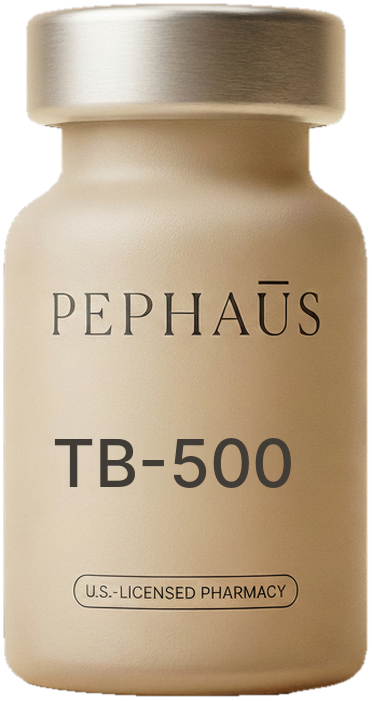
Two questions come up after people learn about recovery peptides: can I take TB-500 and BPC-157 together, and should I? Yes to the first. The second depends on what your provider sees in your health history and what you are recovering from. Many people prescribed one of these peptides later add the other, and many start with both because the two work through different pathways and pair well.
Is this you?
Is this you?
You are thinking about TB-500 and BPC-157 together if:
If you nodded at two or three of those, keep reading.
You have been on one recovery peptide for a few weeks and wonder if adding the second would help.
Your provider mentioned that the two peptides work in complementary ways.
You want to support recovery from training and everyday activity as thoroughly as you can.
You read that people pair these peptides and want to know if that applies to you.
You want to understand what taking both involves before your provider visit.
You are comparing recovery options and cost matters.
TB-500 injections, prescribed online from $152/mo
A quick at home shot. Provider visit and shipping included. Nothing charged unless you are prescribed.
How TB-500 and BPC-157 differ
TB-500 is a synthetic version of the active region of thymosin beta-4, a protein your body makes that is involved in cell movement and tissue repair. BPC-157 is a 15 amino acid peptide originally identified from a protein in human gastric juice. Most published research on both is in lab and animal studies, which is why a provider reviews your health history and sets your dose.
The two work through different mechanisms. TB-500 is studied in animal research for how it influences cell migration, the process that brings repair cells where they are needed. BPC-157 is studied for how it influences growth factor activity and blood vessel formation, both part of the repair process. Neither one is a painkiller, neither one is a steroid, and neither one raises testosterone. They support the body's natural repair process rather than masking symptoms.
Because they work through different pathways, pairing them gives you two signals acting on recovery at the same time. That is why providers often prescribe both for people who want comprehensive recovery support, especially people training hard, people recovering from everyday strain, or people whose recovery feels slower than it used to.
What the provider checks before prescribing both
A provider licensed in your state reviews your health history, current medications and what you are recovering from before prescribing either peptide. When you ask about taking both together, the provider checks that your health history does not exclude either peptide, neither one interacts with your current medications, and your goals fit what these peptides are studied for.
The provider also asks what you have tried already. If you have been on one peptide for a few weeks, the provider wants to know how that went before adding the second. If you are starting fresh, the provider explains what each peptide does and helps you decide whether to start with one or both.
People who compete in a tested sport should check their league's prohibited list first. For everyone else, the decision comes down to your health history, your goals, and cost.
Ready when you are. Ten minutes on your phone.
Start my online visitHow the dosing works when taking both
Your provider sets the dose for each peptide separately based on your weight, your health history, and what you are recovering from. Each peptide has its own vial, its own syringe, and its own schedule. Some protocols dose both peptides on the same days, some alternate them, and some front load one peptide while maintaining the other.
Most people inject TB-500 a few times a week, often Monday, Wednesday and Friday. Most people inject BPC-157 daily or a few times a week. When you are taking both, the provider sets the schedule so the injections fit into your routine. Some people take both injections on the same day, one in the morning and one in the evening. Some people take them at the same time, one injection right after the other, in different sites. The timing is flexible as long as you follow the schedule the provider set.
Each injection is subcutaneous, just under the skin, usually in the belly, thigh or upper arm. The provider teaches the technique during your visit or through a video walkthrough. The needle is small, the injection takes a few seconds, and most people get comfortable with the routine within the first week.
What a typical first month looks like
Week one starts with your provider visit, the prescriptions, and the shipment. The peptides arrive cold packed to your address within a few days. You store both vials in the refrigerator, never the freezer, and start the schedule the provider gave you. Some protocols start with a loading phase, more frequent injections for the first few weeks, then a maintenance phase with fewer injections per week. Other protocols start at maintenance from day one.
Most people report feeling steadier during and after workouts within the first two to three weeks. Some people notice better sleep in the first week. Some people notice nothing for the first few weeks and then realize in hindsight that recovery felt smoother. Individual results vary, which is why the provider checks in after the first few weeks and adjusts the protocol if needed.
Side effects are uncommon with both peptides. When they do happen, the most common ones are mild irritation at the injection site, temporary fatigue in the first few days, or mild flushing. If you notice anything that concerns you, the provider adjusts the dose, changes the timing, or pauses one peptide to see if that resolves it.
Gummies and pills for recovery do not exist
You cannot swallow a recovery peptide and expect it to work. Peptides are chains of amino acids, and your stomach breaks them down before they reach your blood. Swallow it and about one percent reaches your blood. Inject it subcutaneously and about 80 percent does. That is why recovery peptides are injections, compounded by a licensed U.S. pharmacy after a provider review.
What it costs
Each peptide is billed separately. TB-500 is $169 a month billed monthly, $160 a month on the quarterly plan, or $152 a month on the six month plan. BPC-157 is the same: $169 monthly, $160 quarterly, $152 on six months. If you take both, the total is $338 a month on the monthly plan, $320 a month on quarterly, or $304 a month on six months. The provider visit and shipping are included. There is no doctor fee, no membership fee, and no charge unless the provider prescribes.
You can start with one peptide and add the other later, or start with both from the beginning. You can also pause or cancel anytime.
Visit the TB-500 page or visit the BPC-157 page to see pricing details. The recovery peptides overview explains what each peptide is studied for.
LegitScript certified
A licensed U.S. pharmacy vs the grey market
PepHaūs TB-500 and BPC-157 are compounded by a U.S.-licensed 503A pharmacy after a review by a U.S.-licensed physician. That means the peptides are made in a facility inspected by state boards of pharmacy, the doses are verified, the vials are sterile, and you have a provider checking in on your protocol. In October 2026, the FDA granted enforcement discretion allowing licensed compounding pharmacies to compound BPC-157 and TB-500.
The grey market sells research peptides from overseas suppliers with no provider, no pharmacy oversight, and no way to verify what is in the vial. Research vials are sold as not for human use because they are not made under pharmacy standards. Grey market peptides are cheaper up front, but they come with no provider guidance, no sterility guarantee, and no recourse if something goes wrong.
FAQ
FAQ
Can I take TB-500 and BPC-157 at the same time of day?+
Yes. Some people take both injections within a few minutes of each other, in different injection sites. Some people take one in the morning and one in the evening. The provider sets the schedule based on what fits your routine.
Do I need to cycle off TB-500 and BPC-157?+
That depends on your protocol. Some providers prescribe these peptides for a few months, then pause to see if the benefits hold. Other providers prescribe them ongoing for people who train hard year round. The provider checks in after the first month and every few months after that.
How long does it take to notice anything when taking both?+
Most people report steadier recovery within two to three weeks. Some people notice better sleep in the first week. Some people notice nothing for the first few weeks and then realize recovery felt smoother. Individual results vary based on your baseline, your training, your sleep, and your protein intake.
Can I take both if I am already on another peptide like sermorelin or NAD+?+
That depends on your health history. Some people take recovery peptides alongside longevity peptides like NAD+ or sermorelin. The provider reviews your current medications and supplements before prescribing and makes sure nothing interacts.
Do TB-500 and BPC-157 raise testosterone?+
No. Neither peptide raises testosterone, and neither one is a hormone. They are peptides studied for tissue repair, not for hormone replacement. PepHaūs does not sell TRT or HGH.
Can I take these if I am not training hard?+
Yes. These peptides support recovery from everyday activity, not just intense training. Many people take them to support general recovery, better sleep, and how their body handles everyday strain.
What happens if I miss a dose?+
Take the missed dose as soon as you remember, unless it is almost time for the next scheduled dose. In that case, skip the missed dose and continue on schedule. Never double up to make up for a missed dose. You are prescribed by a U.S.-licensed physician, the peptides are compounded by a U.S.-licensed pharmacy, and both TB-500 and BPC-157 are shipped cold packed to your address. The two peptides work through different pathways, pair well, and support recovery from training and everyday activity. Start here to compare recovery peptides and see which pairing fits your goals.
Start your visit from your phone
Ten minutes on your phone. A physician licensed in your state. A box on your porch in 2 to 3 business days.
See if you qualifyYour care team
Every PepHaus visit is reviewed by a licensed physician from the Wasef Health Group provider network. A doctor reads your intake, decides if treatment fits, and sets your plan.
Meet the physiciansThis article is educational and is not medical advice. Compounded medications are not FDA-approved. Treatment requires evaluation by a licensed provider.