Is BPC-157 Safe? What Providers Check Before Prescribing
BPC-157 from a licensed pharmacy with provider oversight gives you dose control and someone to call if anything comes up.
Is this you?
Is this you?
You're curious about BPC-157 for recovery but want to know if it's actually safe before you start. You've seen mixed things online and want straight answers. You want to know what providers check, how the dose is set, and what side effects people actually report. You've heard about grey market vials and want to understand the difference between those and what a licensed pharmacy compounds. You take training seriously and want something that supports recovery without taking unnecessary risk. If you nodded at two or three of those, keep reading.
BPC-157 injections, prescribed online from $152/mo
A quick at home shot. Provider visit and shipping included. Nothing charged unless you are prescribed.
What makes BPC-157 from a U.S. pharmacy different
BPC-157 is a 15 amino acid peptide originally identified from a protein in human gastric juice. PepHaūs sells it only as an injection compounded by a licensed U.S. pharmacy after a provider review. The provider looks at your health history, asks about medications and goals, and sets your starting dose and schedule. Most published research so far comes from lab and animal studies, which is why a provider reviews your health history and sets your dose. That provider oversight is what makes the pharmacy version different from ordering research vials online.
The grey market sells BPC-157 as "research use only" vials from overseas suppliers with no provider, no testing, and no way to verify what's in the vial. A pharmacy compounds it to a set standard, tests each batch, and labels the dose clearly. The provider adjusts your protocol based on how you respond, checks in during the first month, and handles any side effects that come up. That's the safety layer you don't get from a research vial.
FDA enforcement discretion and what it means
In October 2026, the FDA granted enforcement discretion letting licensed 503A compounding pharmacies compound BPC-157, TB-500, MOTS-c, epitalon, KPV, and semax after the July 2026 advisory committee vote. That means licensed pharmacies can now legally compound these peptides when prescribed by a licensed physician. The compounded version is not FDA approved, but it's compounded under pharmacy standards with provider oversight. The enforcement discretion resolved the uncertainty around compounding these peptides and gave people access through the same provider and pharmacy model used for other compounded medications.
Ready when you are. Ten minutes on your phone.
Start my online visitWhat the provider checks before prescribing
The provider asks about your health history, current medications, any allergies, and what you're hoping to support with BPC-157. They want to know if you're taking blood thinners or have any bleeding disorders. They ask about your training schedule and what recovery looks like for you right now. The review usually takes about 10 minutes by phone or video.
If your health history looks good, the provider prescribes a starting dose and schedule. Most people start with a few small shots a week. The provider explains injection technique, where to rotate sites, and what to watch for in the first week. You get the vial with a clear label showing the dose, instructions, and the pharmacy's contact info. The provider checks in during the first month to see how it's going and adjusts the dose if needed.
Side effects and how providers handle them
Most people report no side effects on the provider-set dose. Some report mild redness at the injection site for an hour or two, which goes away on its own. A few people notice a slight headache in the first week, which usually resolves as the body adjusts. If redness lasts longer than a few hours or the site feels warm, the provider adjusts your rotation schedule or checks your injection technique.
Nausea or dizziness is rare but can happen if the dose is too high too fast. The provider lowers the dose and ramps it more slowly. Fatigue in the first few days usually means your body is adjusting, and it clears within a week. If any side effect lasts longer than a few days or gets worse, the provider pauses your protocol and reassesses. That's why the provider review and check-ins matter.
Research status and why provider oversight matters
Most BPC-157 research has been conducted in lab and animal studies, with human research still early. That's not a reason to avoid it, but it's why a provider sets your dose instead of you following a protocol you found online. Animal studies have looked at tissue repair, inflammation response, and recovery timelines, but translating those to humans requires careful dosing and monitoring. The provider uses published research, clinical experience, and your individual response to set a protocol that works for you.
The lack of large human trials also means the long-term safety profile is still being understood. The provider weighs that against your health history and goals. If you have a condition that makes the unknowns too risky, the provider declines the prescription. If your health history is clear and you understand the research status, the provider moves forward with a conservative starting dose.
Gummies and GLP-1 pills are not the same thing
Oral BPC-157 is sold as capsules and tablets, but it's not the same as the injection. Swallow a peptide and about 1 percent reaches your blood because stomach acid breaks it down. Inject it and about 80 percent does. The injection delivers the peptide where the body can use it. The oral version mostly gets digested before it can do anything. If someone is selling BPC-157 gummies or pills, they're banking on you not knowing that absorption difference.
What it costs
BPC-157 is $169 a month billed monthly, $160 a month on the quarterly plan, and $152 a month on the 6-month plan. That includes the provider visit, the vial, syringes, alcohol pads, and free expedited shipping. You can cancel anytime. There's no doctor fee and no membership. The price is the same whether you're in New York or Montana. You can see the full breakdown at /bpc-157 and compare recovery peptide pricing at /recovery.
LegitScript certified
A licensed U.S. pharmacy vs the grey market
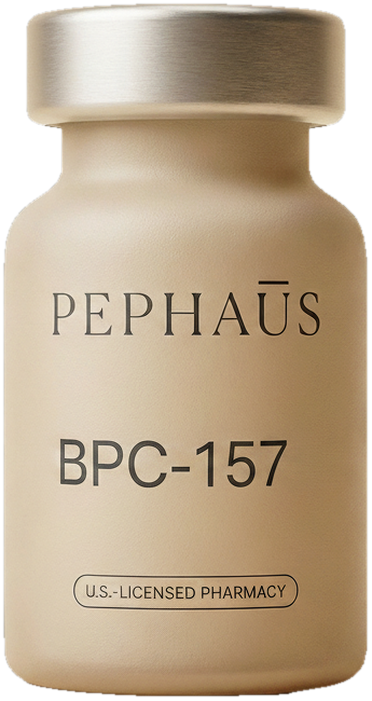
The pharmacy that compounds PepHaūs BPC-157 is licensed, inspects its facility regularly, and tests each batch. The vial label shows exactly what's in it, the dose per injection, and how to store it. If you have a question about the vial or how to use it, the pharmacy has a pharmacist you can call. That's the standard for a 503A compounding pharmacy.
The grey market sells research vials from overseas suppliers with no testing, no sterility guarantee, and no way to know if the dose matches the label. If the vial causes a problem, there's no provider to call and no recourse. If it doesn't work, you have no idea if the dose was wrong or if the vial was bunk. The price difference isn't worth the risk when you're injecting something into your body.
Tested athletes and league rules
If you compete in a sport that tests for prohibited substances, check your league's prohibited list before starting BPC-157. Some sports organizations prohibit peptides like BPC-157 and TB-500 under their anti-doping rules. The provider can't tell you what your league allows, so it's on you to check. If you're tested, bring your league's rules to the provider visit so they know the constraints.
FAQ
FAQ
Is BPC-157 legal in the United States?+
Yes, when compounded by a licensed 503A pharmacy and prescribed by a licensed physician. In October 2026, the FDA granted enforcement discretion allowing these pharmacies to compound BPC-157. It's not FDA approved, but it's legally compounded under the same model as other compounded medications.
Can I take BPC-157 if I'm on other medications?+
The provider reviews your medication list during the visit. Blood thinners, immune suppressants, and some heart medications may need extra consideration, so the provider needs to know what you're taking. If there's a potential interaction, the provider adjusts the protocol or provides alternative guidance.
How long does it take to see results from BPC-157?+
Most people notice steadier recovery within 2 to 3 weeks. Some report feeling less sore after workouts in the first week. The timeline varies based on your training load, sleep, protein intake, and what you're recovering from. The provider explains what to expect during the first month.
What happens if I miss a dose?+
Take it as soon as you remember, then continue your regular schedule. Don't double up to make up for a missed dose. If you miss more than a few doses in a row, the provider may adjust your schedule to get you back on track.
Can I travel with BPC-157?+
Yes. Keep the vial refrigerated when possible, but it stays stable at room temperature for a few days. Use an insulated pouch with an ice pack for longer trips. The vial label shows it's a prescription medication compounded by a licensed pharmacy, which helps if TSA asks.
Is BPC-157 the same as TB-500?+
No. BPC-157 is a 15 amino acid peptide identified from gastric juice, while TB-500 is a synthetic version of thymosin beta-4. They're both studied for recovery, but they work differently. Some people take both together on separate schedules. The provider explains the difference and helps you decide.
What side effects should I watch for?+
Most people report no side effects. Mild redness at the injection site for an hour or two is the most common, and it goes away on its own. If you notice redness that lasts longer, nausea, dizziness, or fatigue that doesn't clear in a few days, contact the provider. They adjust your dose or rotation schedule based on what you're experiencing. BPC-157 from a licensed U.S. pharmacy with provider oversight gives you a protocol set for your health history, dose control, and someone to call if anything comes up. That's what makes it safer than ordering research vials online and guessing at the dose.
Start your visit from your phone
Ten minutes on your phone. A physician licensed in your state. A box on your porch in 2 to 3 business days.
See if you qualifyYour care team
Every PepHaus visit is reviewed by a licensed physician from the Wasef Health Group provider network. A doctor reads your intake, decides if treatment fits, and sets your plan.
Meet the physiciansThis article is educational and is not medical advice. Compounded medications are not FDA-approved. Treatment requires evaluation by a licensed provider.