BPC-157 Injection vs Oral: Absorption, Effectiveness, and What Actually Works
Injectable BPC-157 bypasses digestion and reaches your bloodstream intact. Oral forms break apart in your stomach before they can absorb.
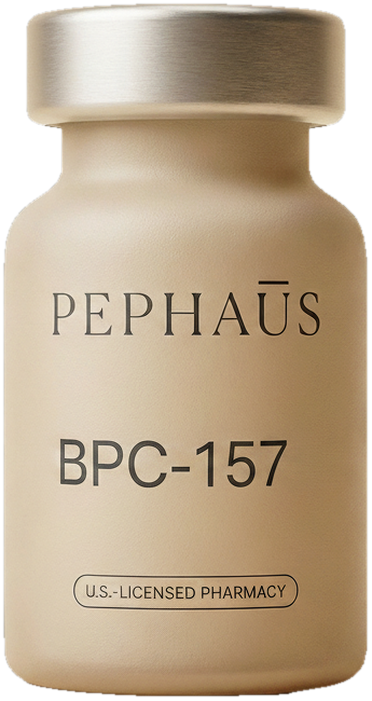
Is this you?
Is this you?
You saw BPC-157 capsules or oral tablets online and wondered if they work the same as injections. You want the most effective form. You prefer swallowing something over injecting if the results are the same. You read that oral forms exist but can't tell if they're legitimate. You want to know what actually reaches your bloodstream. You saw claims about absorption and want the facts. If you nodded at two or three of those, keep reading.
BPC-157 injections, prescribed online from $152/mo
A quick at home shot. Provider visit and shipping included. Nothing charged unless you are prescribed.
The short answer: injections absorb, oral forms mostly don't
BPC-157 is a 15 amino acid peptide. Peptides are chains of amino acids held together by specific bonds. When you swallow a peptide, your stomach acid and digestive enzymes break those bonds apart before the peptide can reach your bloodstream. The peptide gets dismantled into individual amino acids, and what your body absorbs is not the intact peptide your cells would recognize.
Injectable BPC-157 goes under your skin. From there it enters your bloodstream intact, without passing through your digestive system first. The peptide your provider prescribed is the peptide your cells receive. Swallow a peptide and about 1 percent might reach your blood intact. Inject it and about 80 percent does.
Most published research on BPC-157 used injectable forms in lab and animal studies. The human research that exists tested injections. Oral forms have far less research backing them.
What you get with a prescription injection from a U.S. pharmacy
PepHaus sells BPC-157 only as an injection compounded by a U.S.-licensed pharmacy, prescribed by a U.S.-licensed physician who reviews your health history and sets your dose. The vial arrives cold packed with sterile syringes, alcohol wipes, and instructions. You inject a small amount under your skin a few times a week on the schedule your provider sets.
The provider checks your health history, sets your starting dose, tells you when to inject, where to rotate injection sites, and adjusts your protocol based on how you respond. You message the provider anytime with questions. The pharmacy compounds each vial to your exact prescribed dose.
Injections let your provider control exactly how much BPC-157 reaches your bloodstream. That control matters when you're using a peptide to support recovery. The dose that works is the dose your provider can verify you're absorbing.
Ready when you are. Ten minutes on your phone.
Start my online visitLegitScript certified
The grey market oral forms: capsules, tablets, and research vials
Oral BPC-157 capsules and tablets sold online are marketed as research chemicals, not prescription medications. They come from suppliers that do not require a prescription, do not involve a licensed provider, and do not test what you're taking or verify it matches the label.
The bigger issue is absorption. When you swallow a peptide, your stomach acid starts breaking it down immediately. Then your digestive enzymes continue breaking it apart. By the time anything reaches your small intestine, where absorption happens, most of the original peptide structure is gone. Some oral peptide products add coatings or use modified forms meant to protect the peptide through digestion, but those modifications change the peptide itself. The modified version is not the same peptide that research studied.
No oral BPC-157 form sold as a research chemical comes with a provider who reviews your health, sets your dose, or adjusts your protocol. You're guessing at the dose, guessing at timing, and guessing whether what arrived in the mail is what the label says it is.
How injections work step by step
Your provider prescribes a specific dose based on your weight, activity level, and what you're using BPC-157 for. The vial arrives with everything you need. You draw the prescribed dose into a sterile syringe, clean an injection site with an alcohol wipe, pinch the skin, and inject at a 45 or 90 degree angle. The needle is small and thin. The injection itself takes a few seconds.
You inject into subcutaneous tissue, the layer of fat just under your skin. Common sites are your abdomen, thigh, or upper arm. You rotate sites each injection to avoid irritation. The peptide enters your bloodstream from the injection site and circulates throughout your body. Because it never touched your stomach acid or digestive enzymes, it arrives intact.
Most people report the injection feels like a small pinch. Some people feel nothing at all. The injection site might be slightly red for a few minutes. By the next day there's no visible mark. After the first few injections the process becomes routine.
Your provider sets a schedule, usually a few small injections per week. The exact timing depends on your protocol. Your provider adjusts timing and dose based on how you respond over the first few weeks.
Timing, storage, and what normal looks like
BPC-157 vials stay refrigerated between injections. You take the vial out a few minutes before injecting so the solution reaches room temperature. After drawing your dose you put the vial back in the fridge immediately.
A vial lasts about a month depending on your dose and frequency. The pharmacy ships a new vial before you run out. If you travel, you pack the vial in a small cooler with an ice pack.
Most people report noticing steadier recovery within two to three weeks. The timeline varies. Some people report feeling less sore after workouts in the first week. Others notice changes closer to week four. Your provider asks how you're responding at your follow up visits and adjusts the protocol if needed. The peptide pairs with training, sleep, and adequate protein. It supports your body's natural repair process, it does not replace those fundamentals.
What it costs
BPC-157 injections from PepHaus cost $169 a month billed monthly, $160 a month on a quarterly plan, or $152 a month on a six month plan. The provider visit, the vial, syringes, alcohol wipes, shipping, and follow up messages with your provider are all included. Nothing is charged unless a provider reviews your information and writes a prescription. Learn more at /bpc-157 or see the recovery peptides collection.
You can pause or cancel anytime. If you're using TB-500 or sermorelin, you manage everything through one account.
Gummies and GLP-1 pills are not the same thing
BPC-157 gummies do not exist as a prescription product. Some supplement companies sell oral peptide products marketed as gummies or lozenges, but those are not compounded medications and they were never in the clinical research.
If you see BPC-157 gummies, capsules, or tablets sold without a prescription, you're looking at a research chemical or a supplement. Research chemicals are sold for lab use, not human consumption. Supplements are not tested for purity or potency the same way compounded prescriptions are.
LegitScript certified
A licensed U.S. pharmacy vs the grey market
The grey market for peptides is overseas research vial suppliers, supplement companies that add peptides to their product lines, and sellers on platforms that do not verify what's in the vial. You send money, they send a vial. No prescription, no provider, no testing, no accountability.
A licensed U.S. compounding pharmacy operates under state pharmacy law. The pharmacy tests raw materials, compounds each prescription to the exact dose ordered, labels every vial with lot numbers and expiration dates, and ships cold packed. If something arrives damaged, the pharmacy replaces it. If you have a reaction, your provider adjusts your protocol.
In October 2026 the FDA granted enforcement discretion for licensed 503A compounding pharmacies to compound BPC-157 after a provider writes a prescription. That means a licensed pharmacy can legally compound it for you after your provider decides it's appropriate. The compounded version is not FDA approved. It is legal to prescribe and compound under the enforcement discretion rule.
Grey market sellers operate outside that framework. What arrives might be BPC-157, might be diluted, might be something else. You have no way to verify it without sending it to an independent lab yourself.
FAQ
FAQ
Can I switch from oral BPC-157 to injections?+
Yes. If you've been using an oral form from a research supplier and want to switch to a prescription injection, you start with a provider visit. The provider reviews your history, sets your dose, and writes a prescription. You stop the oral form when your first vial arrives.
Do injections hurt more than swallowing a capsule?+
The injection itself takes a few seconds. Most people describe it as a small pinch. The needle is thin. After the first few injections the process feels routine. Swallowing a capsule is easier in the moment, but the absorption difference makes the injection worth the few seconds.
How do I know the injection is working?+
Your provider tracks how you respond over the first few weeks. Most people report steadier recovery, less soreness after training, or quicker bounce back between sessions. Those are subjective reports, not measured outcomes, but they tell your provider the peptide is reaching your system. If you notice nothing after four weeks, your provider adjusts the dose or timing.
Are there any oral peptides that do absorb well?+
Some peptides are small enough or stable enough to survive digestion in meaningful amounts. BPC-157 is not one of them. It is a 15 amino acid chain that digestive enzymes break apart quickly. Modified oral forms exist, but the modifications change the peptide structure.
Can I use both injections and oral forms together?+
Your provider prescribes one form at a time. Mixing a prescription injection with a grey market oral product means your provider cannot track your dose or know what you're taking. If you want to increase your dose, your provider adjusts the injection dose.
Is BPC-157 legal if I buy it from a licensed pharmacy?+
Yes. In October 2026 the FDA granted enforcement discretion for licensed 503A compounding pharmacies to compound BPC-157 after a provider writes a prescription. The compounded version is not FDA approved, but it is legal to prescribe and compound under the enforcement discretion framework.
Do I need to stay on BPC-157 long term?+
Your provider sets the initial protocol, usually a few months. Some people use it for a specific recovery period and then stop. Others use it ongoing as part of their training routine. Your provider reviews your progress at follow up visits and adjusts the plan. If you compete in a tested sport, check your league's prohibited substance list first. Some sports organizations prohibit peptides. Most published BPC-157 research comes from lab and animal studies, which is why a provider reviews your health history and sets your dose. Human research is early, but providers prescribe it based on the available evidence and their clinical judgment. The injection route follows the research methods that showed results.
Start your visit from your phone
Ten minutes on your phone. A physician licensed in your state. A box on your porch in 2 to 3 business days.
See if you qualifyYour care team
Every PepHaus visit is reviewed by a licensed physician from the Wasef Health Group provider network. A doctor reads your intake, decides if treatment fits, and sets your plan.
Meet the physiciansThis article is educational and is not medical advice. Compounded medications are not FDA-approved. Treatment requires evaluation by a licensed provider.