How to Inject MOTS-c: Step-by-Step Guide from Prep to Post-Injection
Master subcutaneous MOTS-c injections in minutes with step-by-step technique, site rotation, and timing tips.
Is this you?
Is this you?
You've been prescribed MOTS-c for cellular energy and endurance, your first vial just arrived, and you're wondering how to actually inject it. You've never given yourself a shot before, or you've used other peptides but want to make sure you're doing this one right. You know subcutaneous injections go into the fat layer under your skin, but you're not sure exactly where to inject, how deep to go, or how often to rotate sites. You want step-by-step guidance so you do it safely the first time. If you nodded at two or three of those, keep reading.
MOTS-c injections, prescribed online from $152/mo
A quick at home shot. Provider visit and shipping included. Nothing charged unless you are prescribed.
What you get from a U.S. pharmacy vs research vials
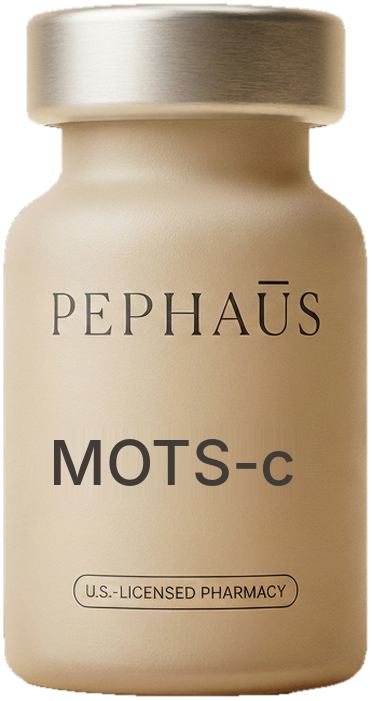
MOTS-c prescribed by a U.S.-licensed physician and compounded by a licensed pharmacy arrives ready to inject. You get a vial that holds the exact dose your provider set, syringes, and alcohol wipes. The concentration is consistent, and you follow a schedule the provider gives you, usually two to three injections per week on non-consecutive days. The provider adjusts based on how you respond.
Research vials sold online as "for research purposes only" come as a powder you reconstitute yourself, you calculate your own dose, and you draw it up with insulin syringes. Those vials are not made under pharmacy oversight, the purity varies, and no provider is checking your health history. This guide covers prescription MOTS-c from a licensed pharmacy.
Step by step: how to inject MOTS-c subcutaneously
Subcutaneous means into the fat layer between your skin and muscle. MOTS-c absorbs well this way, the injection is shallow, and most people report it's quick and nearly painless once they've done it a few times.
Before your first injection, wash your hands with soap and water for at least twenty seconds. Lay out everything you need: the MOTS-c vial, the syringe, alcohol wipes, and a sharps container. If your MOTS-c has been refrigerated, let the vial sit at room temperature for about ten minutes. Cold injections sting more.
Choose your injection site. The best spots are your abdomen, the front or side of your thighs, and the back of your upper arms. Most people use the abdomen because it has a good fat layer and you can reach it easily. Pick a spot at least two inches away from your belly button, and avoid any areas with moles, scars, or bruises.
Prepare the injection. Wipe the top of the vial with an alcohol wipe and let it air dry. If your program uses pre-filled syringes, skip to the next step. If you're drawing the dose yourself, insert the needle into the vial, turn it upside down, and pull back the plunger to draw up the dose your provider prescribed. Check for air bubbles by holding the syringe upright and tapping it gently, then push the plunger slightly to release them.
Clean your skin. Wipe the injection site with a fresh alcohol wipe in a circular motion, starting at the center and moving outward. Let the area air dry completely.
Inject the MOTS-c. Pinch about an inch of skin and fat between your thumb and forefinger. Hold the syringe like a dart at a 45 to 90 degree angle. Insert the needle in one smooth motion, going in about a quarter to half inch deep. Release the pinch, then push the plunger slowly until all the liquid is injected. The whole injection takes about five seconds.
Remove the needle and finish. Pull the needle straight out. Press a clean alcohol wipe over the site for a few seconds if there's any bleeding. Drop the used syringe, needle first, into your sharps container without recapping the needle.
After the injection, you can go about your day. Some people feel a slight sting or see a small red mark, and both go away within minutes. If you notice any swelling, persistent redness, or pain that lasts more than an hour, text your provider.
Ready when you are. Ten minutes on your phone.
Start my online visitRotating injection sites and why it matters
Injecting in the same spot every time can cause irritation, small lumps under the skin, or reduced absorption. Your body needs a chance to recover at each site. The standard rotation pattern is to pick a different spot for each injection, waiting at least a week before returning to the same area.
If you inject three times a week, rotate through six spots: left and right abdomen, left and right thigh, and left and right upper arm if someone can help you. Within the abdomen alone, imagine dividing it into quadrants around your belly button and rotate through them. Some people place each injection about two inches away from the last one.
Rotation keeps the tissue healthy, maintains consistent absorption, and prevents bruises or bumps that can happen with repeated injections in one spot.
Timing your MOTS-c injections around workouts
Your provider sets the schedule, and most protocols call for two to three injections per week on non-consecutive days. Some people inject Monday, Wednesday, and Friday. Others do Tuesday, Thursday, and Saturday. The key is spacing them out so your levels stay steady.
MOTS-c supports cellular energy and endurance by acting on how your mitochondria handle fuel, especially during exercise. Many people who train regularly time one of their weekly injections for the morning of a workout day, usually thirty minutes to two hours before they train. Over weeks of consistent dosing, people report steadier energy during their sessions and better recovery afterward. If you're wondering what changes people notice first, here's a timeline of what to expect.
If your schedule makes morning injections difficult, evenings work too. MOTS-c doesn't interfere with sleep. The timing that matters most is consistency. Injecting on the same days each week keeps your protocol simple.
Gummies and GLP-1 pills are not the same thing
Gummy and pill forms of peptides are sold online, often marketed as convenient alternatives to injections. Peptides are chains of amino acids, and your stomach breaks them down before they reach your bloodstream. Swallow a MOTS-c gummy or tablet, and about one percent of it might make it into your blood. Inject it subcutaneously, and about eighty percent does.
That difference is why licensed providers prescribe MOTS-c as an injection. The clinical research on MOTS-c used injectable forms. Pills and gummies may be easier to take, but they don't deliver the peptide in a form your body can use at meaningful levels.
What it costs
MOTS-c from PepHaūs is $169 a month on the monthly plan, $160 a month if you pay quarterly, and $152 a month on the six-month plan. That includes the provider visit, the MOTS-c compounded by a licensed U.S. pharmacy, all the syringes and supplies, and free expedited shipping. There's no separate doctor fee, and you can cancel anytime. Your first step is a brief intake where the provider reviews your health history and goals. If MOTS-c fits your situation, they prescribe it, and your first shipment arrives in a few days.
You can see pricing details and start the intake at thepephaus.com/mots-c. For more on how MOTS-c works, see the NAD+ and longevity guide and what MOTS-c is and how it supports cellular energy.
LegitScript certified
A licensed U.S. pharmacy vs the grey market
The online market for peptides includes research chemical companies selling MOTS-c as powder vials labeled "not for human use." These products are not compounded under pharmacy regulations, and no provider is involved. You're on your own for reconstituting the powder, calculating the dose, and deciding the schedule. Purity varies, contamination happens, and if something goes wrong, there's no provider to call.
Prescription MOTS-c from a licensed pharmacy is different. The pharmacy operates under state and federal oversight, the compounding process follows safety standards, and a U.S.-licensed physician prescribes your dose after reviewing your health history. If you have questions or need a dose adjustment, you text the provider through the platform. That's the difference: one comes with medical oversight, the other doesn't.
FAQ
FAQ
Where exactly on my abdomen should I inject?+
Anywhere on your abdomen at least two inches away from your belly button works, as long as the area has a pinchable layer of fat. Most people use the area to the left or right of the belly button, below the waistline. Skip any spots with moles or scars.
Can I inject MOTS-c in my thigh or arm instead of my abdomen?+
Yes. The front or outer side of your thigh is a good alternative. The back of your upper arm works too, but you'll need someone to help you. Wherever you inject, make sure you're pinching fat, not muscle.
How deep does the needle go?+
Subcutaneous injections go into the fat layer, which is usually about a quarter to half inch below your skin. The needles are short, often around half an inch long, and you don't insert the whole needle. A 45 to 90 degree angle gets the needle into the fat without going into muscle.
What if I see a small bruise or bump after injecting?+
A small bruise or bump happens occasionally and usually means you nicked a small blood vessel or the injection caused minor irritation. Both go away on their own within a few days. If a bump feels hard, warm, or painful, or if redness spreads, reach out to your provider.
How should I store my MOTS-c vials?+
Keep them refrigerated between uses. MOTS-c is stable in the fridge. Don't freeze it, and don't leave it at room temperature for more than a few hours. Before each injection, let the vial warm to room temperature for about ten minutes.
What do I do with used needles?+
Drop them into a sharps container immediately after use. Sharps containers are sold at most pharmacies, or you can use a hard plastic bottle with a screw-on lid. Never throw loose needles into the regular trash. When the container is about three-quarters full, check your local guidelines for disposal.
Can I inject MOTS-c if I'm also taking NAD+ or another peptide?+
Most people on MOTS-c can pair it with NAD+ injections, sermorelin, or other peptides as long as your provider knows about everything you're taking. The intake form asks about all medications and supplements, and the provider reviews potential interactions. If you start another peptide after beginning MOTS-c, let your provider know. MOTS-c injections become routine after the first few times. You learn where to pinch, how deep to go, and how to rotate sites. The injection itself takes less than a minute, and most people report they hardly feel it once they've done it a handful of times. Your provider is available through the platform if you have questions.
Start your visit from your phone
Ten minutes on your phone. A physician licensed in your state. A box on your porch in 2 to 3 business days.
See if you qualifyYour care team
Every PepHaus visit is reviewed by a licensed physician from the Wasef Health Group provider network. A doctor reads your intake, decides if treatment fits, and sets your plan.
Meet the physiciansThis article is educational and is not medical advice. Compounded medications are not FDA-approved. Treatment requires evaluation by a licensed provider.