What Is MOTS-c? The Mitochondrial Peptide for Cellular Energy
A mitochondrial peptide that supports cellular energy and exercise endurance, prescribed after provider review.
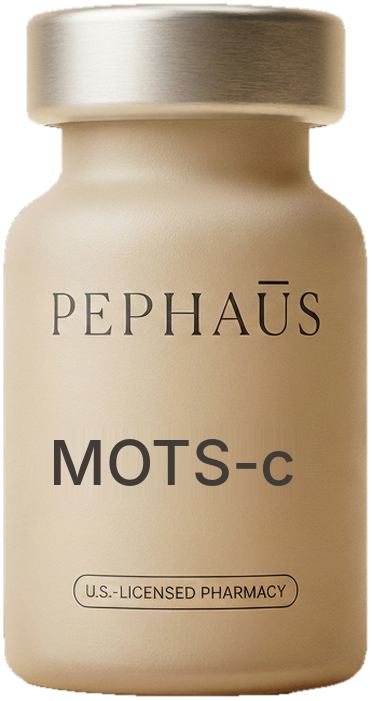
MOTS-c is a mitochondrial-derived peptide that tells your cells how to handle fuel during exercise and stress, and your body makes less of it as you age. Compounded by a U.S.-licensed pharmacy after a provider review, it supports cellular energy and endurance without the weight loss claims or metabolic disease targets you see attached to grey market research vials.
Is this you?
Is this you?
You notice your workouts feel harder than they used to, even when you keep the same schedule. Your energy dips halfway through the day, and it takes longer to feel ready for the next training session. You eat well, sleep enough, and still feel like your body is running on half power. You want something studied for how cells produce energy, not another supplement that promises fat loss or blood sugar fixes. You prefer a U.S. pharmacy and a provider who reviews your health history over an overseas vial with no medical oversight. If you nodded at two or three of those, keep reading.
MOTS-c injections, prescribed online from $152/mo
A quick at home shot. Provider visit and shipping included. Nothing charged unless you are prescribed.
What MOTS-c actually is
MOTS-c is a 16 amino acid peptide encoded in your mitochondrial DNA, the genetic material inside the parts of your cells that make energy. It acts as a signal that tells cells how to handle fuel, especially during exercise and metabolic stress. The name stands for Mitochondrial Open Reading Frame of the 12S rRNA-c, which describes where it sits in the mitochondrial genome. Your body makes it naturally, but levels decline with age, which is one reason research into mitochondrial peptides pairs with longevity science.
Most of the published research on MOTS-c comes from lab and animal studies, which is why a U.S.-licensed provider reviews your health history and sets your dose instead of handing you a protocol from a forum. Human research is early, but the animal work shows it studied for exercise capacity and how the body uses fuel under stress. A provider visit before starting means someone checks whether this fits your health profile, not whether you can find a vial online.
How a compounded version differs from research vials
The grey market sells MOTS-c as a research chemical, usually shipped from overseas with no pharmacy license, no provider review, and no testing for what is actually in the vial. Those vials carry a label that says not for human use, which is the seller's liability shield. You dose yourself, mix it yourself, and if something goes wrong, you have no one to call.
PepHaūs MOTS-c is compounded by a U.S.-licensed pharmacy after a provider licensed in your state reviews your health history and writes a prescription. The peptide is tested, the dose is set for you, and you get expedited shipping in a cold pack with alcohol pads and syringes included. If you have questions or side effects, you message the provider. The October 2026 FDA enforcement discretion decision lets licensed 503A compounding pharmacies compound MOTS-c legally, so a prescription version exists now without the grey market risk.
Ready when you are. Ten minutes on your phone.
Start my online visitWhat the protocol looks like
A provider reviews your health history, asks about your activity level and what you want from treatment, and sets a starting dose if you qualify. Most protocols run a few small subcutaneous injections per week, similar to how other peptides are dosed. The provider adjusts based on how you respond. You inject into fat tissue, usually the abdomen or thigh, rotating sites to avoid irritation.
The injections themselves take less than a minute once you know the steps. MOTS-c comes in a vial that stays refrigerated, you draw the dose with a small insulin syringe, pinch a fold of skin, inject at a 45 degree angle, and apply pressure after. The first time feels awkward, and by the third or fourth injection it becomes routine. Many people time their doses around training, though the provider sets the schedule based on your goals and response.
How fast people notice anything
Timelines vary, and a lot depends on what someone is tracking. Some people report feeling steadier energy within the first two weeks, especially during workouts. Others notice endurance improvements after a month, like finishing a run that used to leave them winded or recovering faster between training sessions. A few report nothing they can point to for six weeks, then realize they have not hit the afternoon energy crash they used to expect.
This is not a stimulant, so you will not feel a jolt an hour after injecting. The changes are more like noticing you trained hard three days in a row and still feel ready to go, or your usual walk feels easier without trying. Individual results vary, which is why the provider checks in after a few weeks and adjusts if needed.
Side effects and how providers handle them
The most common side effects are mild injection site reactions like redness or a small bump that fades in a few hours. Rotating injection sites reduces that. Some people report flushing or warmth after injecting, which usually passes quickly. A smaller number mention headaches in the first week, and drinking more water often fixes it.
If something feels off, you message the provider. They lower the dose, adjust the schedule, or pause treatment depending on what you report. The goal is steady energy and better endurance, not pushing through side effects. Most published research on MOTS-c, even in animal models, shows it well tolerated at the doses studied, but a provider reviews your response in case you are an outlier.
People who compete in a tested sport should check their league's prohibited list first, since peptides are often listed even when legal to prescribe.
Gummies and pills are not the same thing
MOTS-c is not sold as a gummy or a pill, because peptides break down in stomach acid before they reach your blood. Swallow a peptide and about one percent survives digestion. Inject it subcutaneously and the majority reaches circulation intact. That is why injectable peptides, including MOTS-c, are prescribed as injections instead of oral forms.
The grey market sometimes sells oral peptides anyway, and they either do nothing or use additives to try forcing absorption, which brings its own risks. A compounded prescription version comes as an injection because that is the form studied in research and the form that works.
What it costs
PepHaūs MOTS-c is $169 a month billed monthly, $160 a month on a quarterly plan, or $152 a month on a six month plan. That includes the provider visit, the peptide compounded by a U.S.-licensed pharmacy, syringes, alcohol pads, and expedited shipping in a cold pack. No doctor fee, no membership, and you can cancel anytime. The provider visit and follow up messages are covered, so if you need a dose adjustment or have a question, you just message them.
You can see the full pricing and start an intake at thepephaus.com/mots-c.
LegitScript certified
A licensed U.S. pharmacy vs the grey market
The grey market for peptides exists because research chemicals are sold without a prescription under the label not for human use. You buy a vial from a website, it ships from overseas or a domestic reseller, and you dose yourself based on what you read in a forum. No one checks your health history, no one reviews your bloodwork, and if the vial contains something other than what the label says, you find out the hard way.
PepHaūs works with a U.S.-licensed 503A compounding pharmacy that makes MOTS-c after a provider writes a prescription. The pharmacy tests the peptide, the dose is set for your health profile, and a provider licensed in your state reviews your intake. If something goes wrong, you have a provider to message and a pharmacy that follows state and federal regulations. The October 2026 FDA decision means compounded MOTS-c can be prescribed legally, so the choice is between a regulated prescription version and a grey market vial with no oversight.
FAQ
FAQ
What is MOTS-c used for?+
MOTS-c is a mitochondrial peptide studied in animal research for exercise capacity and how the body uses fuel during stress. It supports cellular energy and is part of longevity research. A U.S.-licensed provider prescribes it after reviewing your health history, and many people report steadier energy and better endurance when pairing it with training, sleep, and NAD+.
Is compounded MOTS-c legal?+
Yes. In October 2026 the FDA granted enforcement discretion letting licensed 503A compounding pharmacies compound MOTS-c after a provider writes a prescription. That means a compounded version from a U.S. pharmacy is legal now. The compounded version is not FDA approved, but the FDA decision allows pharmacies to make it under the same regulations that govern other compounded medications.
How is MOTS-c dosed?+
A provider sets the dose based on your health history, activity level, and goals. Most protocols run a few small subcutaneous injections per week. The provider adjusts based on your response, so the dose can go up, down, or stay the same depending on what you report. Never start a dose you found online without a provider reviewing your health first.
Can I take MOTS-c with NAD+?+
Many people pair MOTS-c with NAD+ because both support cellular energy and mitochondrial function. A provider reviews your full supplement and medication list during intake and tells you if there is a reason to avoid pairing them. Most of the time the two work well together, especially when combined with training, protein, and sleep.
How long does MOTS-c take to work?+
Some people notice steadier energy within two weeks, especially during workouts. Others see endurance improvements after a month. A few report nothing they can point to for six weeks, then realize they recover faster or feel less fatigued. Individual results vary, and a provider checks in after a few weeks to see how you respond.
What are the side effects of MOTS-c?+
The most common side effects are mild injection site reactions like redness or a small bump that fades quickly. Some people report flushing or warmth after injecting, which usually passes on its own. A smaller number mention headaches in the first week, and drinking more water often fixes it. If something feels off, message the provider and they adjust your dose or schedule.
Does MOTS-c help with weight loss?+
MOTS-c is studied for cellular energy and exercise capacity, not weight loss. If someone is looking for a peptide prescribed for weight management, tirzepatide and semaglutide are the compounds studied for that. MOTS-c supports how your cells produce and use energy, which pairs with training and an active lifestyle, but it is not a weight loss treatment. Compounded MOTS-c from PepHaūs is prescribed by a U.S.-licensed physician after a provider review, compounded by a U.S.-licensed pharmacy, and shipped in a cold pack with everything you need to start. You can begin an intake at thepephaus.com/mots-c or read more about mitochondrial peptides and NAD+ at thepephaus.com/nad-guide .
Start your visit from your phone
Ten minutes on your phone. A physician licensed in your state. A box on your porch in 2 to 3 business days.
See if you qualifyYour care team
Every PepHaus visit is reviewed by a licensed physician from the Wasef Health Group provider network. A doctor reads your intake, decides if treatment fits, and sets your plan.
Meet the physiciansThis article is educational and is not medical advice. Compounded medications are not FDA-approved. Treatment requires evaluation by a licensed provider.