Understanding Your Tirzepatide Prescription: What the Label Means and When to Step Up
Your prescription label tells you the dose, how much to inject, and when to step up.
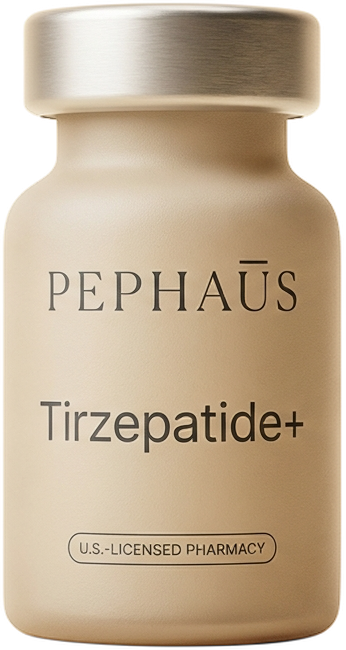
The concentration on your tirzepatide prescription label tells you how many milligrams are in each milliliter, the dose is how many milligrams you inject, and the volume is how many milliliters you draw up to get that dose. Reading the label correctly means you inject the right amount every time and know exactly when to step up.
Is this you?
Is this you?
If you nodded at two or three of those, keep reading.
Just got your first shipment and staring at the vial trying to decode the label
Want to know what the numbers mean so you can inject confidently
Not sure when to step up to your next dose or how your provider decides
Wondering if your concentration is different from what you expected
Want to do this right from the start and avoid common mistakes
Need to understand the syringe markings and how they match the vial
Compounded tirzepatide, prescribed online from $215/mo
One weekly shot. Provider visit and cold shipping included. Nothing charged unless you are prescribed.
See your yearly and weekly costWhat the label says and how to read each part
Your vial label shows the medication name, the concentration in milligrams per milliliter, the total volume in the vial, and the dose you inject. The concentration tells you how strong the solution is. The dose is how many milligrams you are prescribed to inject. The volume is how many milliliters you draw up in the syringe to get that dose.
A label that says "Tirzepatide 2.5 mg/0.5 mL" means you inject 0.5 milliliters to get a 2.5 milligram dose. A label that says "Tirzepatide 5 mg/mL, 2 mL vial" means the whole vial holds 2 milliliters of solution, and each milliliter contains 5 milligrams of tirzepatide. If your dose is 2.5 mg, you draw up 0.5 mL from that vial. If your dose is 5 mg, you draw up 1 mL.
The syringe has markings that show milliliters. A standard insulin syringe has markings for 0.1 mL, 0.2 mL, 0.3 mL, and so on. If your label says to inject 0.5 mL, you fill the syringe to the 0.5 mL mark. The number on the syringe is the volume, and the volume you draw depends on the concentration in the vial. Same dose, different concentration means different volume.
Providers set the concentration based on what fits your dose schedule and how many doses one vial holds. A higher concentration means you inject less volume to get the same dose. A lower concentration means you inject more volume. The dose is what matters for your results, not the volume or the concentration.
When to step up and how your provider decides
Your provider starts you at 2.5 mg once a week for the first four weeks. That low start lets your body adjust to the medication without getting hit with side effects. After four weeks, if you tolerate it well and you are ready, you step up to 5 mg. Four weeks later you step up to 7.5 mg, then 10 mg, then 12.5 mg, then 15 mg if needed.
The four-week step is standard because that is how long it takes for your blood level to reach steady state at each dose. Stepping up faster means stacking doses before your body adjusts, and that is how people end up with nausea, vomiting, or other side effects that make the medication hard to tolerate. The titration schedule is tested in clinical trials and it works.
Your provider checks in after the first month to see how you are handling the medication, whether you are having side effects, and how your appetite and weight are responding. If you feel fine and your appetite is manageable, you step up. If you are having a rough week with nausea or other issues, you stay at your current dose for another month and step up when you are ready.
Reaching your maintenance dose takes a few months. Some people stay at 10 mg, some go to 12.5 mg or 15 mg. Your provider adjusts based on how your body responds and whether you are still losing weight or if progress has stalled. If you hit your goal weight and want to hold it, you can drop to a lower maintenance dose that keeps appetite manageable without driving further loss.
Ready when you are. Ten minutes on your phone.
Start my online visitHow to inject and what day to pick
Inject into your belly, thigh, or upper arm once a week on the same day. Pick a day that fits your schedule, mark it on your phone, and stick to it. The medication has a half-life of about five days, so taking it on the same day every week keeps your blood level steady.
If you miss a dose by a day or two, take it as soon as you remember and then go back to your regular schedule. If it has been more than three days, skip that dose and take your next one on your usual day. Do not double up to make up for a missed dose. That can cause side effects.
Rotate your injection sites each week. If you inject in your belly this week, use your thigh next week, then your upper arm the week after. Rotating sites reduces the chance of irritation or scar tissue building up in one spot.
FAQ
Common prescription label questions people ask
What if my vial concentration is different from what I expected?+
Your dose stays the same, the volume changes. A 10 mg/mL concentration means 0.25 mL gives you 2.5 mg. A 5 mg/mL concentration means 0.5 mL gives you 2.5 mg. A 2.5 mg/mL concentration means 1 mL gives you 2.5 mg. The dose is what counts, and your provider tells you which volume to inject based on the concentration in your vial.
Can I step up my dose faster than four weeks?+
Your provider sets your schedule. Stepping up too fast is how people end up with side effects that make the medication hard to tolerate. The four-week step is tested in clinical trials, it is safe, and it lets your body adjust at each level before you move up.
What if I feel side effects at my current dose?+
Stay at your current dose for another month. Most side effects are mild and fade as your body adjusts. If side effects are making life hard, message your provider through the portal. They respond within a day or two and can slow your titration, adjust your dose, or recommend ways to manage the symptoms.
How do I store my vial after it arrives?+
Keep it in the refrigerator between 36 and 46 degrees Fahrenheit. Do not freeze it. Once you start using a vial, it is good for 28 days in the fridge. After 28 days, discard it even if there is medication left. Mark the date you first used it on the vial with a marker so you know when 28 days is up.
What if I accidentally inject too much?+
Call your provider right away. Watch for nausea, vomiting, diarrhea, and low blood sugar. Do not wait to see if symptoms show up. Your provider will tell you what to do and whether you need to be seen.
What do the syringe markings mean?+
The syringe has markings for milliliters. A standard insulin syringe holds 1 mL and has markings every 0.1 mL. The number on the syringe is the volume, not the dose. Your dose is measured in milligrams, and the volume you draw depends on the concentration in the vial. If your label says to inject 0.5 mL, you fill the syringe to the 0.5 mL mark.
Can I split my weekly dose into two smaller injections?+
No. Tirzepatide is dosed once a week, and splitting it into smaller injections changes how the medication works. The weekly schedule keeps your blood level steady and matches the dosing tested in clinical trials. If you want to inject less volume at once, ask your provider about a higher concentration so the same dose fits in a smaller volume.
What if my prescription says a different dose than what I read online?+
Your provider sets your dose based on your health history, how you respond to the medication, and where you are in the titration schedule. Online dosing charts are general guidance, but your provider adjusts based on your body. Follow the dose on your prescription label and message your provider if you have questions.
The real thing vs the rest
Gummies and GLP-1 pills are not the same thing
Gummies and liposomal drops were never in the clinical trials. When you swallow semaglutide or tirzepatide in a gummy or liposomal form, stomach acid breaks most of it down and about one percent reaches your blood. Inject it and about 80 percent does. Injectable tirzepatide averaged about 20 percent total body weight loss in clinical trials, and semaglutide about 15 percent. The gummies people buy at stores were not part of those trials, and the absorption difference means they do not deliver the same results.
The real thing vs the rest
A gummy cannot do this. Not even close.
Weight loss gummies, so called GLP-1 pills and liposomal drops sold on social media were never in the clinical trials. Injectable tirzepatide and semaglutide were. Overseas research-only vials have no pharmacy and no physician behind them.

Weight loss gummies
0 mg
No GLP-1 medication inside. Fiber and plant extracts.
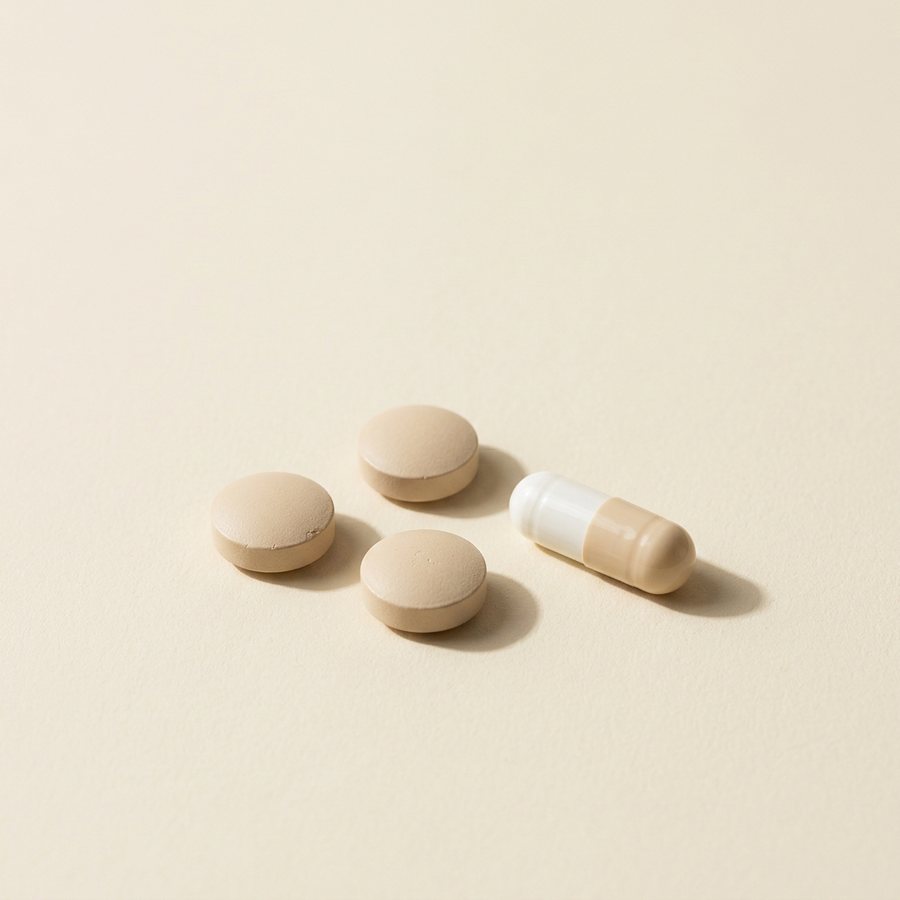
Pills and drops
about 1%
Swallow it and about 1 of every 100 units reaches your blood.
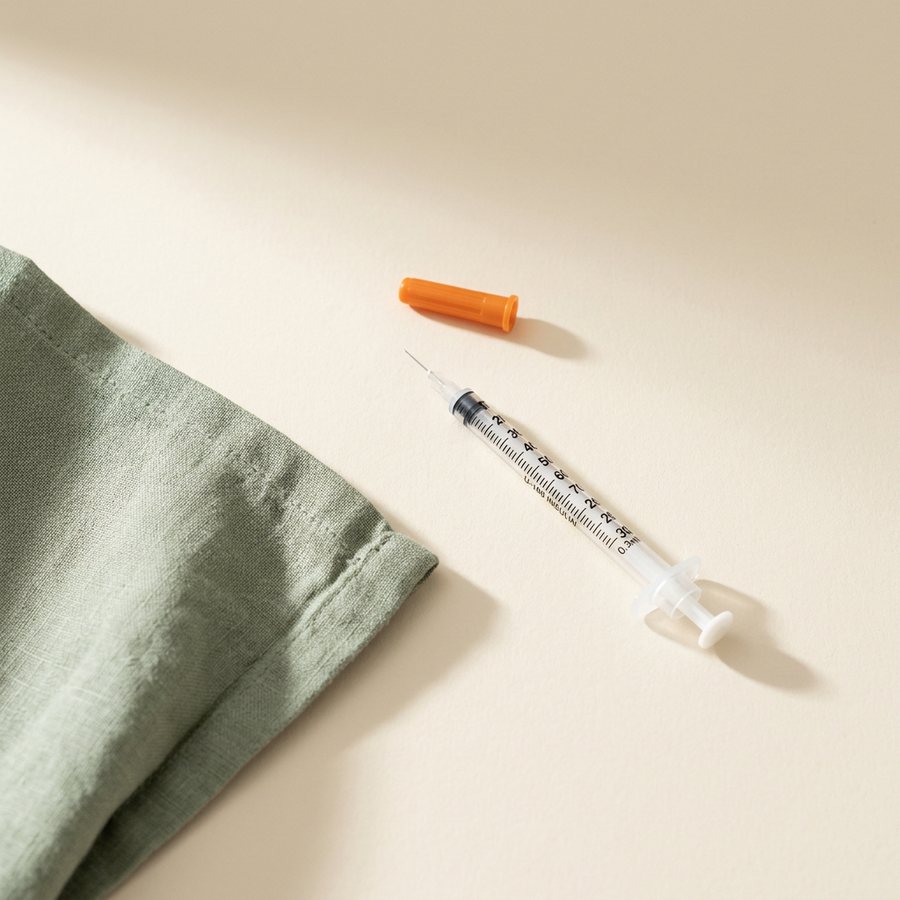
Weekly injection
about 80%
Absorbed from the fat layer. Nothing in the way.
Swallow it: about 1% reaches your blood. Inject it: about 80% does. Same comparison we show on our homepage.
| What you get | PepHaūs prescription | Gummies and “GLP-1 pills” | Grey market vials |
|---|---|---|---|
| Studied in clinical trials | |||
| Average loss in clinical trials | About 15% to 20% of body weight | None reported | Unknown |
| Physician licensed in your state | |||
| U.S.-licensed pharmacy | |||
| Tested product, cold shipped | |||
| Provider visit included | |||
| Dose tuned to you |
Pricing
What it costs
Compounded tirzepatide from a licensed U.S. pharmacy runs $239 a month when you pay monthly, $227 a month on the quarterly plan, and $215 a month if you pay for six months up front. That includes the provider visit, the medication compounded by a U.S.-licensed pharmacy, and free expedited shipping. There is no doctor fee, no membership, and you can cancel anytime. The compounded tirzepatide cost page breaks down what you pay at each plan length.
Pricing in your door
One price. Provider visit, medication and shipping included.
- First month$239
- 3-month plan$227/mo
- 6-month plan$215/mo
- First month$169
- 3-month plan$160/mo
- 6-month plan$152/mo
- Provider visit
- Medication
- Cold shipping to your door
- Refills on a schedule
- Care team messaging
- Cancel anytime online
LegitScript certified
A licensed U.S. pharmacy vs the grey market
Compounded tirzepatide prescribed by a U.S.-licensed physician and compounded by a U.S.-licensed pharmacy means someone reviewed your health, the medication is made to FDA standards, and you have support if something feels off. The grey market sells research vials shipped from overseas with no prescription, no provider, and no testing for purity or dose accuracy. The pharmacy path costs more up front, but the safety gap is the difference between regulated healthcare and buying chemicals online.
When you understand your prescription label, you inject confidently and you know what to expect at each step. If you have questions about your dose, your titration schedule, or how to read the label, message your provider and they respond within a day or two.
Get started with compounded tirzepatide prescribed by a U.S.-licensed provider, or read the tirzepatide guide for the full picture. For more on dose schedules, check out tirzepatide dosage for weight loss and switching from semaglutide to tirzepatide.
What if the label is different from what I ordered?
The dose is what matters, not the concentration. Your provider prescribed a specific milligram dose, and the pharmacy sets the concentration to fit your dose schedule and vial size. If the concentration looks different from what you expected, the volume you draw changes but the dose stays the same.
Can I reuse a syringe?
No. Use a new syringe for every injection. Reusing syringes increases the risk of infection and dulls the needle, which makes the injection hurt more. Your shipment includes enough syringes for your full month.
What if I inject into the wrong spot?
Tirzepatide is subcutaneous, so it goes into the fatty tissue just under the skin. The belly, thigh, and upper arm all work. If you accidentally inject into muscle instead of fat, the medication still works. The injection might feel a bit different, but it absorbs fine.
How do I know if my vial is still good?
Check the date you first used it. Tirzepatide is good for 28 days in the fridge after the first injection. If the medication looks cloudy, has particles floating in it, or changed color, do not use it. Message your provider and they will send a replacement.
Start your visit from your phone
Ten minutes on your phone. A physician licensed in your state. A box on your porch in 2 to 3 business days.
See if you qualifyKeep reading
- Tirzepatide, prescribed online
- The complete tirzepatide guide
- What tirzepatide costs at PepHaus
- Tirzepatide Results 3 Months: What to Expect by the End of Your First Quarter
- Tirzepatide Side Effects After Stopping: What to Expect
- Tirzepatide Side Effects After First Dose: What to Expect in the First Few Days
Your care team
Every PepHaus visit is reviewed by a licensed physician from the Wasef Health Group provider network. A doctor reads your intake, decides if treatment fits, and sets your plan.
Meet the physiciansThis article is educational and is not medical advice. Compounded medications are not FDA-approved. Treatment requires evaluation by a licensed provider.