NAD+ vs GHK-Cu: Energy and Focus vs Skin Firmness
NAD+ is for energy and cellular health. GHK-Cu is for skin firmness and fine lines. Different systems, different goals.
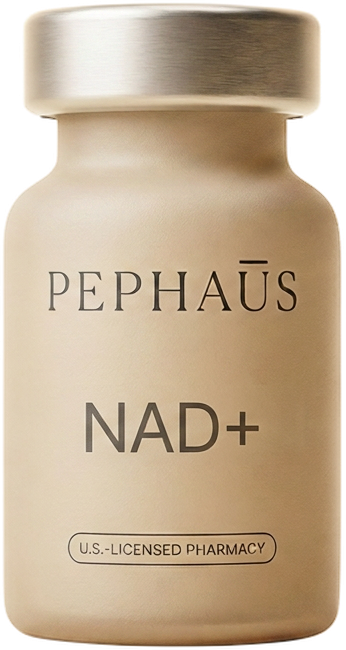
Is this you?
Is this you?
A few of these might sound familiar:
If you nodded at two or three of those, keep reading.
You heard both NAD+ and GHK-Cu called peptides, and you want to know what each one actually does
You want energy and focus support, and you also care about your skin, and you wonder if one covers both
You are deciding between the two and want to know which one fits your goals
You saw both mentioned together online and want to know if they work better as a pair or separately
You want to know if you can use both at the same time or if you should pick one
You are not sure which one to start with, and you want a clear comparison
NAD+ injections, prescribed online from $179/mo
A quick at home shot. Provider visit and shipping included. Nothing charged unless you are prescribed.
NAD+ supports cellular energy, focus, and longevity
NAD+ is a coenzyme your cells use to turn food into energy. Every cell in your body runs on NAD+, and your levels drop with age. When NAD+ is low, your cells produce less energy, and you feel it as fatigue, brain fog, and slower recovery. NAD+ injections deliver the coenzyme directly into your bloodstream, where it reaches your cells and supports the energy production pathways that power everything you do.
People use NAD+ injections for energy that lasts through the day, mental clarity when focus has been slipping, and recovery support after tough workouts or long weeks. The energy NAD+ supports is steady, not jittery. You do not feel a spike and crash like you would from caffeine. You feel like your cells have what they need to keep up with what you ask of them. Many people also use NAD+ as part of a longevity plan. Your cells need NAD+ to repair DNA, manage oxidative stress, and maintain the mitochondria that produce energy. Supporting those pathways now helps your cells function better as you age.
NAD+ is injected subcutaneously, usually once a week. The injection takes about ten seconds, and the coenzyme enters your bloodstream within minutes. Most people notice better energy and focus within the first few doses. You can use NAD+ on its own, or pair it with other peptides like sermorelin for recovery and sleep support. NAD+ addresses cellular energy and mental clarity. It does not affect your skin directly.
GHK-Cu supports collagen, elastin, and skin repair
GHK-Cu is a tripeptide bound to copper that your body makes naturally and makes less of with age. It supports collagen production, elastin synthesis, and the repair processes that keep skin firm and smooth. PepHaūs sells GHK-Cu only as a prescription strength topical cream for the face and neck, not as an injection. You apply a thin layer once a day on clean, dry skin, under your moisturizer and sunscreen.
People use GHK-Cu cream for firmer looking skin, softer fine lines, and more even tone. The published studies of GHK-Cu cream ran about 12 weeks and reported improvements in skin density and firmness. Individual results vary. Some people notice smoother texture within a few weeks. Others see the most visible changes around the three month mark. GHK-Cu works by supporting the collagen and elastin your skin needs to stay firm and resilient. It does not affect your energy, focus, or cellular function the way NAD+ does.
GHK-Cu cream is applied topically to the face and neck. It does not enter your bloodstream the way an injection does, so it stays local to the skin you treat. You layer it with vitamin C serums and other active ingredients, timing them so they do not interfere. GHK-Cu pairs well with niacinamide and hyaluronic acid at the same time of day. You use it at the opposite end of the day from retinoids and strong acids. The routine matters as much as the product.
Ready when you are. Ten minutes on your phone.
Start my online visitThey address completely different goals
NAD+ and GHK-Cu are not alternatives to each other. They work on separate systems in separate ways. NAD+ is a coenzyme injected subcutaneously that supports cellular energy production, mental clarity, and longevity pathways throughout your whole body. GHK-Cu is a copper peptide applied topically that supports collagen and elastin production in the skin you treat. If your goal is energy and focus, NAD+ fits. If your goal is firmer skin and softer fine lines, GHK-Cu fits. If you want both, you use both.
NAD+ does not improve your skin directly, and GHK-Cu does not boost your energy or mental clarity. They do not overlap in function, so you do not have to choose one or the other unless your budget or your goals point to one priority. Some people start with the one that addresses their biggest concern, and add the other later. Others use both from the start because they care about energy and skin equally.
Can you use both at the same time?
Yes. NAD+ is injected subcutaneously and works systemically throughout your body. GHK-Cu is applied topically and stays local to your skin. They do not interact with each other, and using both does not increase side effects or reduce effectiveness. You inject NAD+ once a week, usually in the morning or early afternoon when you want the energy support to carry through the day. You apply GHK-Cu cream once a day, at whatever time of day fits your skincare routine.
Many people pair them because they address separate priorities that matter at the same stage of life. Your cells need NAD+ to produce energy and manage the repair processes that support longevity. Your skin needs GHK-Cu to support the collagen and elastin that keep it firm. Supporting both systems at once makes sense when both are priorities for you.
Pricing
What it costs
NAD+ injections from PepHaūs cost $199 a month if you pay month to month, $189 a month if you prepay for three months, or $179 a month if you prepay for six months. That includes the provider visit, the compounded NAD+ from a U.S.-licensed pharmacy, and free expedited shipping. You can cancel anytime. For more details, see the NAD+ injection cost page.
GHK-Cu cream from PepHaūs costs $149 a month, billed monthly, and you can cancel anytime. That includes the provider review, the compounded cream from a U.S.-licensed pharmacy, and free expedited shipping. One jar is a 30 day supply when used as directed. For more details, see the GHK-Cu cream page.
Pricing in your door
One price. Provider visit, medication and shipping included.
- Provider visit
- Medication
- Cold shipping to your door
- Refills on a schedule
- Care team messaging
- Cancel anytime online
LegitScript certified
A licensed U.S. pharmacy vs the grey market
Overseas research vials of NAD+ or GHK-Cu sold as "for research only" are not compounded by a licensed pharmacy, not prescribed by a licensed physician, and not tested for what they claim to contain. You cannot know what you are injecting or applying. PepHaūs NAD+ and GHK-Cu are compounded by a U.S.-licensed pharmacy under FDA guidelines, prescribed by a U.S.-licensed physician after a health review, and shipped directly to your door. You know what you are getting, and you have a provider to check in with if anything feels off.
FAQ
FAQ
Which one should I start with if I can only afford one?+
Pick the one that addresses your biggest priority right now. If you wake up tired, struggle with focus, or feel like your energy has dropped over the past few years, start with NAD+. If you are most concerned about your skin firmness, fine lines, or tone, start with GHK-Cu cream. You can add the other one later when your budget allows.
Does NAD+ help with skin at all?+
NAD+ supports cellular health throughout your body, including the cells in your skin. Healthier cells function better, and that can support skin health indirectly through better energy production and repair. The effect is systemic, not targeted to your skin the way GHK-Cu cream is. If your main goal is skin firmness and fine lines, GHK-Cu cream is the direct path.
Does GHK-Cu give you energy?+
No. GHK-Cu cream is applied topically to the skin and does not enter your bloodstream in amounts that would affect your energy or cellular function. It supports collagen and elastin production in the skin you treat. If your goal is energy and focus, NAD+ is what addresses that.
Can I apply GHK-Cu cream and inject NAD+ on the same day?+
Yes. They do not interact. NAD+ is injected subcutaneously and works systemically. GHK-Cu is applied topically to your face and neck and stays local. You can do both on the same day with no issue.
How long does it take to see results from each one?+
Most people notice better energy and focus from NAD+ within the first few doses, usually within the first week or two. GHK-Cu cream takes longer. Some people notice smoother texture within a few weeks, and the most visible firmness and tone changes show up around the three month mark when used consistently.
Are NAD+ and GHK-Cu both peptides?+
NAD+ is a coenzyme, not a peptide. It is made of nicotinamide and adenine, and your cells use it directly in energy production. GHK-Cu is a tripeptide, which means it is three amino acids linked together and bound to copper. They are chemically different and work through completely separate pathways.
Can I use both if I am also using sermorelin or semaglutide?+
Yes. NAD+ pairs well with sermorelin for energy, recovery, and sleep support. GHK-Cu cream is topical and does not interact with injectable peptides. Semaglutide is for weight loss, and it does not interact with NAD+ or GHK-Cu. You can use any combination that fits your goals. NAD+ supports energy, focus, and cellular health. GHK-Cu supports skin firmness, fine lines, and tone. They work on separate systems and address different goals. If you care about both, you use both. Learn more at the NAD+ page , the GHK-Cu guide , or start online at NAD+ injections online or GHK-Cu cream .
Start your visit from your phone
Ten minutes on your phone. A physician licensed in your state. A box on your porch in 2 to 3 business days.
See if you qualifyYour care team
Every PepHaus visit is reviewed by a licensed physician from the Wasef Health Group provider network. A doctor reads your intake, decides if treatment fits, and sets your plan.
Meet the physiciansThis article is educational and is not medical advice. Compounded medications are not FDA-approved. Treatment requires evaluation by a licensed provider.