BPC-157 for Workout Recovery: What to Expect Week by Week
BPC-157 supports the body's natural repair process after workouts, helping you recover faster between training sessions.
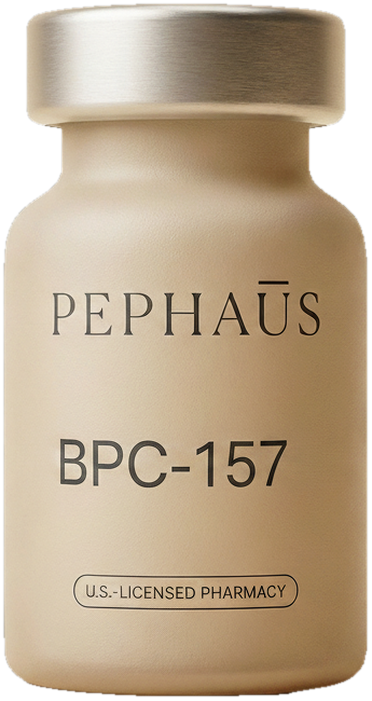
You finish your last set, grab your water, and two days later you're still sore enough that your next session feels harder than it should. Recovery takes time, and when training is part of your routine, you need that time to shrink. BPC-157 is a peptide that supports the body's natural repair process after workouts, prescribed by a U.S.-licensed provider and compounded by a U.S.-licensed pharmacy.
Is this you?
Is this you?
If a few of these sound familiar, keep reading:
If you nodded at two or three of those, keep reading.
You train hard a few times a week and recovery between sessions takes longer than you'd like.
You're consistent with protein and sleep, but you still wake up stiff after leg day or a heavy lifting session.
You've noticed that the second or third workout of the week feels tougher because your body hasn't fully bounced back from the first.
You're in your 30s or 40s and recovery isn't as quick as it used to be, even though your effort level hasn't changed.
You've heard about peptides for recovery but you're not sure what actually works or what's safe from a licensed pharmacy.
You want something that pairs with your training and nutrition, not a shortcut that skips the work.
You're an athlete who competes or trains seriously, and you need every session to count without grinding yourself down.
You'd rather work with a provider who checks your health and adjusts your dose than order research vials online with no medical oversight.
BPC-157 injections, prescribed online from $152/mo
A quick at home shot. Provider visit and shipping included. Nothing charged unless you are prescribed.
What BPC-157 does for workout recovery
BPC-157 is a 15 amino acid peptide originally identified from a protein in human gastric juice. Most of the research so far comes from lab and animal studies, which is why a provider reviews your health history and sets your dose. It's been studied for its role in supporting the body's natural repair process, particularly in tissues that take stress during training.
When you lift, run, or push through a hard workout, you create small-scale stress in muscle, connective tissue, and the areas around joints. That stress is what drives adaptation, but the adaptation only happens if your body repairs the damage well. BPC-157 is studied for how it supports that repair process. Many people report that soreness clears faster, that they can train again sooner, and that the cumulative wear from multiple sessions per week feels lighter.
The peptide is administered as a small subcutaneous injection, a few times a week on the schedule your provider sets. It's compounded by a licensed U.S. pharmacy after a provider review, so you're getting a prescription product, not a research vial from overseas. The protocol runs for weeks or months depending on your training load and what your provider sees in your follow-ups.
How the protocol works
You start with a provider visit, done by video. The provider reviews your health history, your training routine, any areas that recover slowly, and what you've tried before. If BPC-157 fits, they write a prescription. The pharmacy compounds it and ships it cold-packed to your address, usually arriving in two to four days.
The dosing schedule is a few small injections per week, spaced around your training. Some people inject on training days, some do it on off days, and your provider sets the timing based on your routine. The injection itself is subcutaneous, into the fatty tissue of your abdomen or thigh, using a small insulin-style syringe. The whole process takes about 30 seconds once you're used to it.
You store the vial in the refrigerator between uses. Each vial lasts for the number of injections your provider prescribes, then you move to the next one. Most people stay on the protocol for a few months, long enough to see how their recovery responds across multiple training blocks.
Your provider checks in after the first few weeks to see how you're responding. If recovery is improving and you're tolerating it well, the dose usually stays steady. If side effects show up, the provider adjusts. The goal is to find the dose that supports your recovery without overdoing it.
Ready when you are. Ten minutes on your phone.
Start my online visitWhat the first month looks like
Week one: you're learning the injection routine and getting used to the schedule. Some people notice that post-workout soreness feels a little lighter by the end of the first week, but most don't see dramatic changes yet. You're still training at your usual intensity.
Week two to three: this is when most people report that recovery between sessions starts to shift. You might notice that the soreness after a hard session clears a day sooner, or that your third workout of the week doesn't feel as beaten down as it used to. The changes are gradual, not overnight.
Week four and beyond: recovery becomes more consistent. You're able to push harder in each session because you're coming in fresher, and the cumulative fatigue from multiple sessions per week doesn't pile up the way it did before. Some people say their joints feel smoother, that the stiffness they used to wake up with has softened, and that they can train more often without feeling ground down.
Individual results vary, and how fast you notice a difference depends on your training load, your age, how well you're sleeping, and how much protein you're getting. BPC-157 pairs with training, sleep, and nutrition, it doesn't replace them.
Side effects and how providers handle them
Most people tolerate BPC-157 well. The most common side effect is minor irritation at the injection site, redness or a small bump that goes away in a day. If that happens, your provider may suggest rotating injection sites or adjusting your technique.
Some people report mild fatigue in the first week as their body adjusts to the peptide. If that shows up, your provider may adjust the dose or the timing of your injections. Headaches can happen in the early days, usually mild and usually gone by week two. If they persist, your provider can lower the dose.
Nausea is rare, but if it happens it's usually related to injection timing. Taking the injection with food or at a different time of day often clears it up. If you notice anything unusual, your provider adjusts the protocol. The point is to support recovery, not to push through side effects.
How BPC-157 compares to TB-500
TB-500 is another recovery peptide, a synthetic version of thymosin beta-4. Both are studied for tissue repair in animal research, and both are compounded by licensed U.S. pharmacies after a provider review. The difference is in how they work and what people report.
BPC-157 is more localized. It's often used by people who have one area that recovers slowly after training, though many use it for general workout recovery. TB-500 is more systemic, affecting tissue repair throughout the body. Some people take both together on a provider-supervised protocol, with BPC-157 a few times a week and TB-500 once or twice a week. Your provider sets the combination based on your training and your goals.
If you're deciding between them, the question is whether your recovery issue is general or focused. If it's general wear from training volume, either one can work. If you have a specific area that's slow to bounce back, BPC-157 is usually the first choice. Many people start with one and add the other later if their provider recommends it.
What it costs
BPC-157 from PepHaūs costs $169 a month billed monthly, $160 a month on a quarterly plan, or $152 a month on a six-month plan. That includes the provider visit, the compounded peptide, and free expedited shipping. There's no doctor fee, no membership, and you can cancel anytime. You pay once a month and the next supply ships before you run out.
The cost covers the full protocol, not just the vial. Your provider is available for follow-ups, dose adjustments, and questions. If you try it for a month and it's not helping, you stop. If it's working, you keep going and the cost stays flat.
LegitScript certified
A licensed U.S. pharmacy vs the grey market
The internet is full of research vials of BPC-157 sold as "for research purposes only." Those vials are made overseas, shipped without a prescription, and not checked by anyone. You don't know the dose, you don't know if it's sterile, and there's no provider setting your protocol or adjusting it if something feels off.
A compounded version from a licensed U.S. pharmacy is prescribed by a provider who reviewed your health, made by a pharmacy that follows federal compounding standards, and shipped cold-packed to protect the peptide. You have someone to call if side effects show up, someone who adjusts your dose if you need it, and a supply chain you can trust. The difference matters.
In October 2026 the FDA granted enforcement discretion allowing licensed 503A compounding pharmacies to compound BPC-157. That means it's legal for a provider to prescribe it and a licensed pharmacy to compound it, though it's not FDA approved as a drug. Research vials sold online are still grey market, still unregulated, and still shipped without medical oversight.
FAQ
FAQ
Can I use BPC-157 if I compete in a tested sport?+
If you compete in a sport with drug testing, check your league's prohibited list before starting. BPC-157 may appear on some lists. The provider can review your sport's rules with you during your visit.
How long does it take to see results?+
Most people notice a shift in recovery between week two and week four. Some report changes in the first week, others take a full month. Your training load, age, sleep, and protein intake all affect how fast you respond.
Do I need to cycle on and off?+
Your provider sets the duration based on your goals and how you're responding. Some people stay on for a few months during a heavy training block, others use it year-round. There's no standard cycle, it's based on your situation.
Can I take BPC-157 with TB-500?+
Yes, many people take both on a provider-supervised protocol. BPC-157 a few times a week and TB-500 once or twice a week is a common combination. Your provider sets the schedule.
What if I miss an injection?+
Take it as soon as you remember, then continue your normal schedule. Missing one injection doesn't reset your progress. If you miss several, your provider can adjust the protocol.
Is BPC-157 safe for long-term use?+
Most of the safety data comes from shorter studies in animals. Human research is early. Your provider monitors you over time and adjusts if needed. If you're on it for months, your provider checks in regularly to make sure it's still working and you're tolerating it well.
Can I use BPC-157 if I'm over 50?+
Yes, age isn't a barrier. Many people in their 40s, 50s, and 60s use BPC-157 for workout recovery. Your provider reviews your health history and sets a dose that fits. You train because it matters, and recovery is what lets you keep showing up. BPC-157 supports the repair process your body already runs after every session. It's prescribed by a provider, compounded by a licensed pharmacy, and shipped to your door. If you're consistent with training, sleep, and protein, and recovery is still slower than you need it to be, this is worth a look.
Start your visit from your phone
Ten minutes on your phone. A physician licensed in your state. A box on your porch in 2 to 3 business days.
See if you qualifyYour care team
Every PepHaus visit is reviewed by a licensed physician from the Wasef Health Group provider network. A doctor reads your intake, decides if treatment fits, and sets your plan.
Meet the physiciansThis article is educational and is not medical advice. Compounded medications are not FDA-approved. Treatment requires evaluation by a licensed provider.