BPC-157 Dosage: How Your Provider Sets Your Protocol
Your provider sets your BPC-157 dose based on your health history, recovery goals and how you respond to treatment.
BPC-157 Dosage: How Your Provider Sets Your Protocol
Yes, BPC-157 has a dosing protocol, and your provider sets it based on your health history, recovery goals and response to treatment. The typical schedule involves a few small injections per week, with doses measured in micrograms and adjusted as your provider tracks how you respond.
Is this you?
Is this you?
If you nodded at two or three of those, keep reading.
You train hard and want to support your body's natural recovery between sessions
You heard about BPC-157 for recovery and want to know how the dosing actually works
You want a provider to review your case and set the dose, not buy research vials and guess
You need the protocol explained step by step before you start
You want something compounded by a U.S.-licensed pharmacy, not an overseas research lab
You compete in a tested sport and want to make sure you can use it legally
You already started and want to know when your provider adjusts the dose
BPC-157 injections, prescribed online from $152/mo
A quick at home shot. Provider visit and shipping included. Nothing charged unless you are prescribed.
How the provider sets your starting dose
Your provider reviews your health history first. They check your current recovery patterns, training load, any medications you take, and what you want BPC-157 to support. BPC-157 is a 15 amino acid peptide originally identified from a protein in human gastric juice that supports the body's natural repair process.
Most of the research so far comes from lab and animal studies, which is why a provider reviews your health history and sets your dose based on your individual case. They start you at a dose that fits your goals and adjust from there.
The provider sets the injection frequency, usually a few times a week. Some protocols run daily for the first few weeks, then taper to every other day. Others start at three times a week and stay there. Your provider picks the schedule that fits your recovery timeline and watches how you respond.
Ready when you are. Ten minutes on your phone.
Start my online visitWhat a typical first month looks like
Week one: you inject on the schedule your provider gave you, usually subcutaneous shots in the abdomen or thigh. The injection itself takes about 30 seconds. You keep training and sleeping as usual, and the provider asks you to note any changes in how you feel after workouts.
Week two: your body adjusts. Many people report noticing steadier recovery between sessions, less soreness lingering into the next day, or feeling ready to train again sooner. Your provider checks in and asks how the injections are going.
Week three: the protocol settles in. You know the routine, the injection technique feels automatic, and you can tell whether the dose is supporting your recovery goals. If progress feels slower than expected, the provider can adjust the dose or frequency before week four.
Week four: the provider reviews your first month. They ask what changed, how your training felt, whether soreness patterns shifted, and if the injection schedule fits your routine. Based on that, they decide whether to keep the dose, adjust it, or change the frequency.
How doses adjust based on your response
Providers adjust BPC-157 doses in a few situations. If you respond well at the starting dose and your recovery feels supported, the dose stays the same. If recovery progress plateaus after a few weeks, the provider can increase the dose slightly or add an extra injection day per week.
If you notice any mild side effects, such as slight fatigue or headache in the first few days, the provider can lower the dose or spread the same weekly amount across more injection days. Side effects with BPC-157 are uncommon, and when they happen providers handle them by adjusting the protocol.
Your training load matters too. If you ramp up volume or intensity, the provider can adjust your dose to match the increased demand. If you take a deload week or taper for a race, they can dial the dose back.
Injection technique and timing
The provider teaches you the injection technique before you start. BPC-157 is injected subcutaneously, which means into the fatty tissue just under the skin. Common sites are the abdomen, thigh, or the back of the arm. You rotate sites to avoid injecting the same spot repeatedly.
Timing varies by protocol. Some people inject first thing in the morning on an empty stomach. Others inject before bed. A few protocols split the dose across two injections per day. Your provider picks the timing that fits your recovery goals and daily routine.
Injections pair with training, sleep and protein. BPC-157 supports the body's natural repair process, and that process runs on adequate sleep, good nutrition and consistent training stimulus. The peptide works alongside those basics, not instead of them.
Storage and handling
BPC-157 ships cold packed and stays refrigerated. The provider gives you storage instructions when you start. Typical guidance is to keep the vial in the refrigerator at 36 to 46 degrees Fahrenheit, away from light. Once you draw a dose into the syringe, inject it right away.
If you travel, the provider explains how to keep the vial cold. Small insulated cases with ice packs work for short trips. For longer travel, some providers adjust the protocol timing so you finish a vial before you leave or start a new one when you return.
How long people stay on BPC-157
Protocols vary. Some people run BPC-157 for 8 to 12 weeks, then take a break and assess how recovery feels off the protocol. Others stay on it longer if their provider tracks steady progress and sees no reason to stop. A few run shorter cycles of 4 to 6 weeks timed around heavy training blocks.
Your provider sets the duration based on your recovery goals and response. They check in periodically, ask how training feels, and decide whether to continue, pause, or adjust. If you compete in a tested sport, check your league's prohibited list first. Some organizations restrict peptides, and you want to know your league's rules before you start.
Gummies and pills are not the same thing
You cannot swallow BPC-157 and expect the same effect as an injection. Oral forms get broken down in the stomach before they reach your bloodstream. Injectable BPC-157 bypasses digestion and delivers the peptide where it can support the repair process. Pills, capsules and nasal sprays sold online are research chemicals, not compounded medications from a licensed pharmacy.
What it costs
BPC-157 from PepHaūs is $169 a month on the monthly plan, $160 a month billed quarterly, or $152 a month on the 6-month plan. The provider visit and shipping are included. No doctor fee, no membership, no markup. You can cancel anytime.
LegitScript certified
A licensed U.S. pharmacy vs the grey market
BPC-157 compounded by a U.S.-licensed 503A pharmacy comes with a provider review, tested ingredients, and a protocol set for your case. Grey market research vials have no provider, no testing, and no oversight. You order them online, guess the dose yourself, and hope the vial contains what the label says.
In October 2026, the FDA granted enforcement discretion letting licensed 503A compounding pharmacies compound BPC-157 after the July 2026 advisory committee vote. That means you can get it legally from a pharmacy with a provider's prescription, not as an unapproved research chemical.
The pharmacy tests each batch for purity and potency. The provider sets your dose based on your health history. If you have questions or side effects, the provider adjusts the protocol. With a research vial, you are on your own.
FAQ
FAQ
How does the provider know what dose to start me on?+
They review your health history, training load, recovery patterns, current medications and what you want BPC-157 to support. Based on that, they pick a starting dose and injection frequency that fits your case. Most people start at a moderate dose and adjust from there based on response.
Can I adjust my own dose if I feel like I need more?+
No. Your provider sets the dose and handles adjustments. If you feel like the current dose is not supporting your recovery the way you expected, tell your provider. They can increase the dose, add an extra injection day, or change the timing. Adjusting on your own without the provider's input can throw off the protocol.
How often do I inject BPC-157?+
It depends on your protocol. Common schedules are daily, every other day, or three times a week. Your provider picks the frequency that fits your recovery timeline and adjusts it based on how you respond.
What happens if I miss a dose?+
Inject as soon as you remember, then get back on your regular schedule. If you miss a whole day, do not double up the next day. Just continue with the next scheduled dose. If you miss several doses in a row, tell your provider. They might adjust the schedule to make it easier to stick with.
Do I need to cycle off BPC-157?+
Some protocols run 8 to 12 weeks, then pause to assess how recovery feels off the peptide. Others continue longer if the provider sees steady progress. Your provider sets the duration and decides when to pause or continue based on your response.
Can I take BPC-157 with other peptides?+
Your provider reviews any other peptides or medications you take before starting BPC-157. Some people pair it with TB-500, another recovery peptide. The provider sets the protocol for both and makes sure the combination fits your case.
Is BPC-157 legal for athletes?+
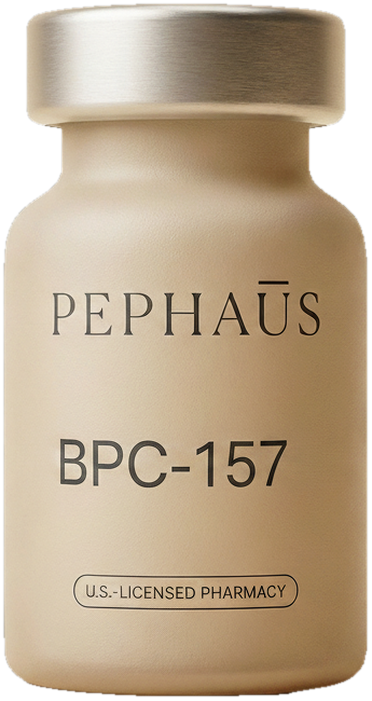
BPC-157 compounded by a licensed pharmacy is legal under the FDA's October 2026 enforcement discretion policy. If you compete in a tested sport, check your league's prohibited list first. Some organizations restrict peptides, and you want to know your league's rules before you start. The provider prescribed it, a licensed pharmacy compounded it, and you are taking it under medical supervision. That is different from ordering research vials online. But the league's rules decide whether you can use it in competition, so check before you start. Your provider sets your BPC-157 dose based on your health history and recovery goals, adjusts it as you respond, and handles any questions or side effects that come up. The protocol pairs with training, sleep and protein to support the body's natural repair process. Start here: PepHaūs BPC-157 .
Start your visit from your phone
Ten minutes on your phone. A physician licensed in your state. A box on your porch in 2 to 3 business days.
See if you qualifyYour care team
Every PepHaus visit is reviewed by a licensed physician from the Wasef Health Group provider network. A doctor reads your intake, decides if treatment fits, and sets your plan.
Meet the physiciansThis article is educational and is not medical advice. Compounded medications are not FDA-approved. Treatment requires evaluation by a licensed provider.