NAD+ vs Glutathione: Which One Do You Actually Need?
One powers your cells. One protects them. How to pick between NAD+ and glutathione, and when it makes sense to run both.
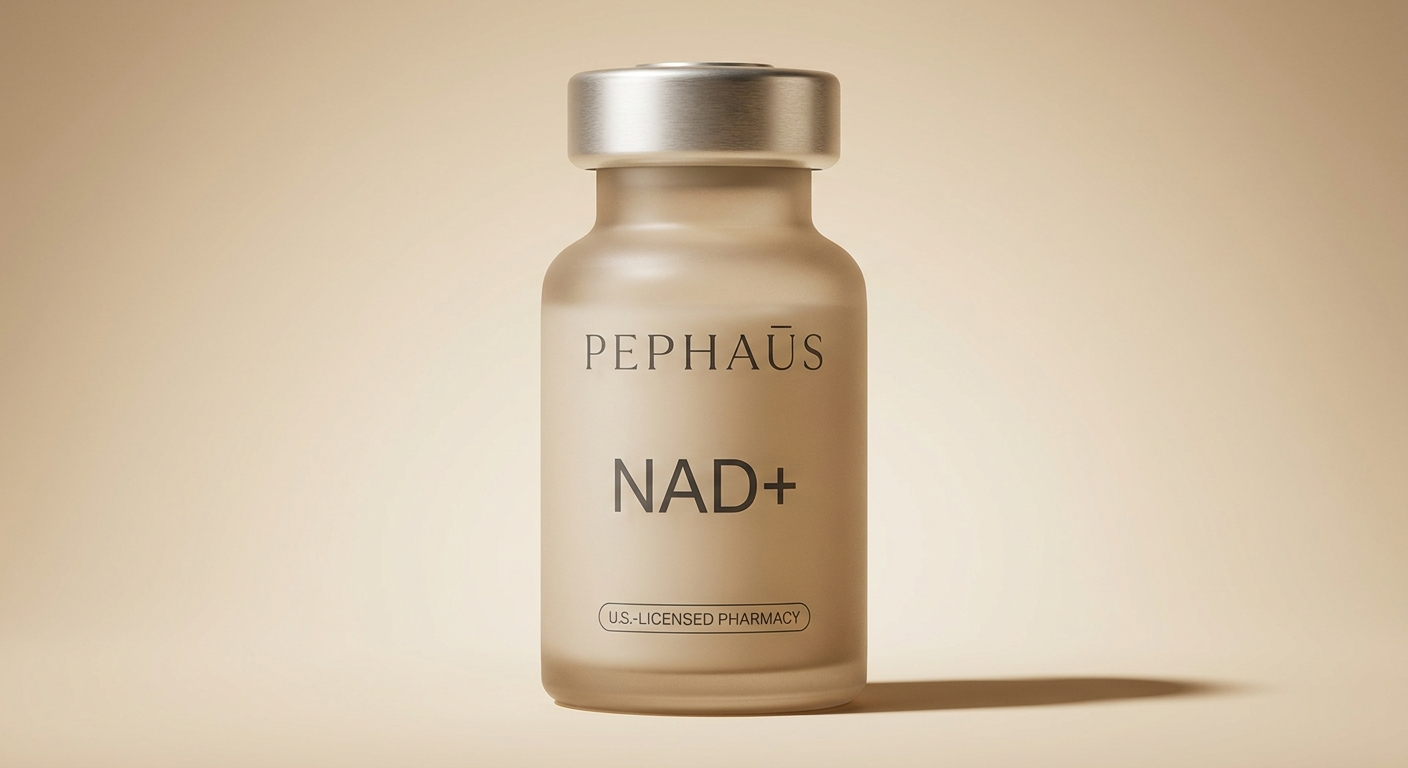
NAD+ and glutathione get mentioned in the same breath constantly, and they do belong to the same conversation. Both are molecules your body makes. Both decline with age and stress. Both are available as weekly at home injections. But they do different jobs, and picking between them starts with knowing which job you need done.
Is this you?
Sound familiar?
You are wiped out after every meal.
You snack at night and hate it in the morning.
The 3 pm slump hits like a wall.
Your favorite jeans live in the back of the closet.
You have tried every diet and the scale will not move.
Clinic visits and waiting rooms do not fit your life.
You work shifts, or the nearest specialist is an hour away.
You want your energy back and to feel like yourself again.
If you nodded at two or three of those, this was built for you. Keep going.
The one sentence version
NAD+ is fuel. Glutathione is protection. NAD+ powers the energy production inside every cell, so people reach for it when the complaint is fatigue, brain fog or slow recovery. Glutathione neutralizes oxidative damage, so people reach for it when the goal is skin, liver support and daily detox capacity.
What NAD+ does
NAD+ is a coenzyme your mitochondria use to turn food into usable energy. Levels fall with age, and that decline is one of the more studied features of aging biology.
Patients who choose NAD+ are chasing output. Energy that lasts through the afternoon. Clearer focus. A faster bounce back from training, travel or a demanding week. When patients describe a response, it is often in those terms, feeling switched back on. The honest caveat is that human trials are still early and individual responses vary. Best results tend to show over 3 to 6 months of steady weekly use.
Ready when you are. Ten minutes on your phone.
Start my online visitWhat glutathione does
Glutathione is the antioxidant your liver produces to neutralize free radicals and process what your day throws at it. Alcohol, poor sleep, sun, pollution and stress all draw down the supply.
Patients who choose glutathione are chasing a different outcome. Skin that looks clear and glowing. Support for the liver's natural detox and repair work. Feeling lighter and less run down. Skin changes, when they come, tend to show between weeks 4 and 8, with providers suggesting the same 3 to 6 month window to judge fairly.
How to choose
Ask yourself which sentence sounds more like you.
- I am tired, foggy and slow to recover, and I want my energy back. That is the NAD+ profile.
- I want my skin clearer and I want to support my liver against everything I throw at it. That is the glutathione profile.
Price is close enough that it should not drive the decision. At PepHaus, NAD+ starts at $179 a month and glutathione at $143 a month on 6 month plans, each with the provider visit, medication, supplies and shipping included.
Do they stack?
They are complementary rather than redundant, one working on energy production and the other on damage control, and some patients run both. Two honest notes. Each purchase goes through its own intake and its own physician review, so a provider signs off on the combination for your history. And adding one at a time is smarter than starting both at once, because you will never know which one is doing what.
The part nobody says out loud
Neither molecule outruns bad fundamentals. Short sleep will beat NAD+ every time. A heavy drinking schedule will drain glutathione faster than a weekly dose restores it. These injections support a body you are also taking care of. Framed that way they can be a reasonable addition. Framed as a substitute for the basics they will disappoint you.
FAQ
Frequently asked questions
Which one works faster?+
Neither is fast. NAD+ responders often describe energy shifts within the first month. Glutathione skin changes tend to need one to two skin cycles, meaning 4 to 8 weeks. Both deserve a 3 to 6 month judgment window.
Can I switch from one to the other?+
Yes. Each product has its own intake and physician review, and there is no penalty for stopping one and trying the other. Cancel anytime applies to both.
Are these FDA approved?+
Compounded NAD+ and glutathione are not FDA approved finished products. Each is prepared by a licensed U.S. compounding pharmacy for an individual prescription after a physician review.
Who reviews my intake?+
Licensed physicians from the Wasef Health Group provider network review every PepHaus visit and write every prescription.
Start your visit from your phone
Ten minutes on your phone. A physician licensed in your state. A box on your porch in 2 to 3 business days.
See if you qualifyKeep reading
Your care team
Every PepHaus visit is reviewed by a licensed physician from the Wasef Health Group provider network. A doctor reads your intake, decides if treatment fits, and sets your plan.
Meet the physiciansThis article is educational and is not medical advice. Compounded medications are not FDA-approved. Treatment requires evaluation by a licensed provider.