Is TRT Worth It or Should You Try Peptides First?
Sermorelin can improve recovery and energy without shutting down testosterone production the way TRT does.
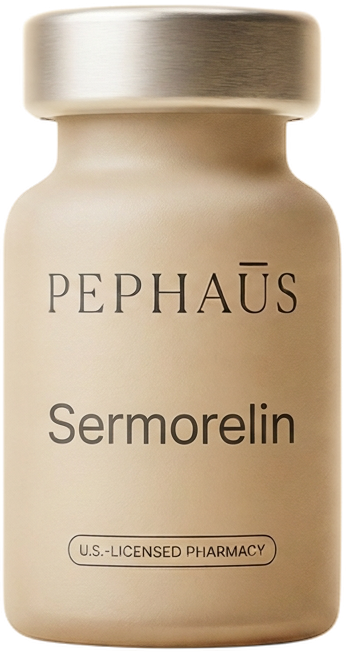
TRT replaces testosterone when your levels are low. Sermorelin supports growth hormone release. They work on different pathways, and many men find that trying sermorelin first answers whether their recovery and energy issues trace back to growth hormone instead of testosterone.
Is this you?
Is this you?
You got labs back and your testosterone is borderline or low normal. Your doc mentioned TRT and you are considering it. You also heard about peptides and you wonder if you should try that route first. You want better recovery and more energy, but you do not want to shut down your natural production unless you have to. You want to know which path makes sense.
If that landed, keep reading.
What TRT does and how it works
Testosterone replacement therapy delivers synthetic testosterone, usually through weekly or biweekly injections. Your blood levels come up. Energy improves, libido picks up, and recovery can get better. The trade is that your body stops making its own testosterone while you are on it. The feedback loop shuts down. When you stop TRT, it can take months for natural production to restart, and some men never get back to where they were.
TRT is the right call for men with clinically low testosterone, confirmed by labs showing levels below normal range on multiple tests. For men whose testosterone is low normal or borderline, the decision gets trickier. Some men go on TRT and feel great. Others go on it and realize six months later that their issue was not testosterone at all, and now they are committed to injections for life if they want to maintain their levels.
What sermorelin does and how it works
Sermorelin is a growth hormone releasing hormone analog. It signals your pituitary to release growth hormone in its natural nightly pulse. Growth hormone supports tissue repair, protein synthesis, and body composition. It works on a separate pathway from testosterone. You can have normal testosterone and low growth hormone, or low testosterone and normal growth hormone, or both low at the same time.
Sermorelin does not raise testosterone. It does not shut down your natural testosterone production. It works upstream on the growth hormone pathway, and your body stays in control of how much it makes. Many men who thought they needed TRT find that supporting growth hormone with sermorelin gives them the recovery, energy, and body composition improvements they were chasing, without touching their testosterone at all.
Ready when you are. Ten minutes on your phone.
Start my online visitWhy men try sermorelin before TRT
TRT is a commitment. Once you start, getting off it cleanly is hard. Your natural production shuts down, and restarting it requires time, patience, and sometimes medications to kickstart the process. Some men stay on TRT for life because coming off feels worse than staying on.
Sermorelin does not carry that risk. It supports your own production without replacing it. If you try it for three months and it does not help, you stop and your natural levels stay where they were. There is no shutdown, no restart protocol, and no permanence. That makes sermorelin a lower risk first step for men who are not sure whether their issue is testosterone or growth hormone.
What results look like on sermorelin vs TRT
On TRT, most men notice energy improvements within the first few weeks. Libido picks up. Mood stabilizes. Recovery improves if testosterone was the bottleneck. Muscle gains come easier when paired with training. The results can be dramatic if your testosterone was truly low.
On sermorelin, the timeline is a little longer. Better sleep shows up within the first two weeks. Recovery improvements appear around week four to six. Body composition changes take two to three months. Energy improves, but it is less about mood and libido and more about feeling rested, recovering faster, and keeping up through the day without crashing.
Some men get everything they need from sermorelin. Others try it for three months, realize their testosterone is still the issue, and then add TRT with their provider's guidance. A few men end up using both, prescribed by their physician to address separate pathways.
Can you use sermorelin and TRT together?
Yes, if your physician prescribes both. They work on different systems. Sermorelin supports growth hormone release. TRT replaces testosterone. Some men find that adding sermorelin to their TRT protocol improves recovery, sleep, and body composition beyond what TRT alone provided.
The decision to use both should come from your provider, based on your labs and your symptoms. Do not add sermorelin on top of TRT without running it by your doc first.
How to decide which one to try first
Get labs. Check your testosterone, your free testosterone, and ideally your IGF 1, which is a marker for growth hormone activity. If your testosterone is clinically low and your IGF 1 is normal, TRT makes sense. If your testosterone is normal or borderline and your IGF 1 is low, sermorelin is the better first step. If both are low, talk to your provider about which one to address first or whether to use both.
If you do not have labs yet, start with your symptoms. Low testosterone tends to show up as low libido, mood swings, brain fog, and trouble building muscle even with training. Low growth hormone shows up as slow recovery, light sleep, stubborn fat around the midsection, and workouts that do not produce results. There is overlap, but the patterns are different.
Many men whose testosterone is borderline choose to try sermorelin first because it does not shut down their natural testosterone production. If sermorelin solves the recovery and energy issues, they avoided TRT entirely. If it does not, they still have TRT as an option, and their natural testosterone production never got touched.
Pricing
What it costs
Sermorelin from PepHaūs runs $159 for the first month, $151 on the three month plan, and $143 on the six month plan. Provider visit included. Compounded by a U.S. licensed pharmacy, prescribed by a U.S. licensed physician.
TRT costs vary widely. Clinic based TRT can run $150 to $400 per month depending on the provider and how often you need lab work. Telehealth TRT providers tend to be cheaper, closer to $100 to $200 monthly. Either way, TRT is a longer commitment because stopping it cleanly takes planning.
Pricing in your door
One price. Provider visit, medication and shipping included.
- First month$159
- 3-month plan$151/mo
- 6-month plan$143/mo
- Provider visit
- Medication
- Cold shipping to your door
- Refills on a schedule
- Care team messaging
- Cancel anytime online
LegitScript certified
A real U.S. pharmacy vs the grey market
Grey market peptides and grey market testosterone show up on forums and research chemical sites. No prescription, no pharmacy oversight, no way to verify what dose you are getting or whether the vial is safe. The price looks good until you realize there is no physician guiding you and no recourse if something goes wrong.
PepHaūs is LegitScript certified. Every sermorelin prescription is written by a U.S. licensed physician. Every vial is compounded by a U.S. licensed pharmacy. You get dosing guidance, a care team, and support through the process. That is the difference between a real treatment and a gamble.
FAQ
FAQ
Can sermorelin raise my testosterone?+
No. Sermorelin works on the growth hormone pathway, not testosterone. It does not raise testosterone levels. If your testosterone is low, sermorelin will not fix it. You need TRT or a protocol to address low testosterone directly.
How long should I try sermorelin before deciding if it works?+
Give it at least two months. Sleep and recovery improvements show up in the first four to six weeks. Body composition changes take longer, closer to three months. If you try it for two months and notice zero improvement, it is probably not the right tool for your issue.
Will TRT help with recovery?+
Yes, if low testosterone was the bottleneck. Testosterone supports protein synthesis and recovery. If your testosterone is low, bringing it up to normal range can improve how you recover from training. But if your testosterone is already normal, TRT will not do much for recovery. That is where growth hormone support comes in.
Can I stop sermorelin anytime?+
Yes. Sermorelin supports your natural growth hormone production. It does not replace it. If you stop, your levels return to where they were before you started. There is no shutdown, no restart protocol, and no long term commitment.
What if I need both?+
Some men do. If your testosterone is low and your growth hormone markers are low, your provider can prescribe both. They work on separate pathways and do not interfere with each other. Always run it by your provider before combining treatments.
Ready to start
PepHaūs brings sermorelin to your door with an online provider visit, a licensed U.S. pharmacy, and a care team you can message anytime. First shipment arrives in about two to three business days after approval. Visit /sermorelin to see how it works, read about sermorelin vs testosterone for energy, or check out the peptides vs TRT comparison. When you are ready, go to /start and take the first step.
Start your visit from your phone
Ten minutes on your phone. A physician licensed in your state. A box on your porch in 2 to 3 business days.
See if you qualifyYour care team
Every PepHaus visit is reviewed by a licensed physician from the Wasef Health Group provider network. A doctor reads your intake, decides if treatment fits, and sets your plan.
Meet the physiciansThis article is educational and is not medical advice. Compounded medications are not FDA-approved. Treatment requires evaluation by a licensed provider.