GHK-Cu Cream vs Injection: Which Is Better for Skin?
For your face and neck the cream goes right where you want results. No needles.
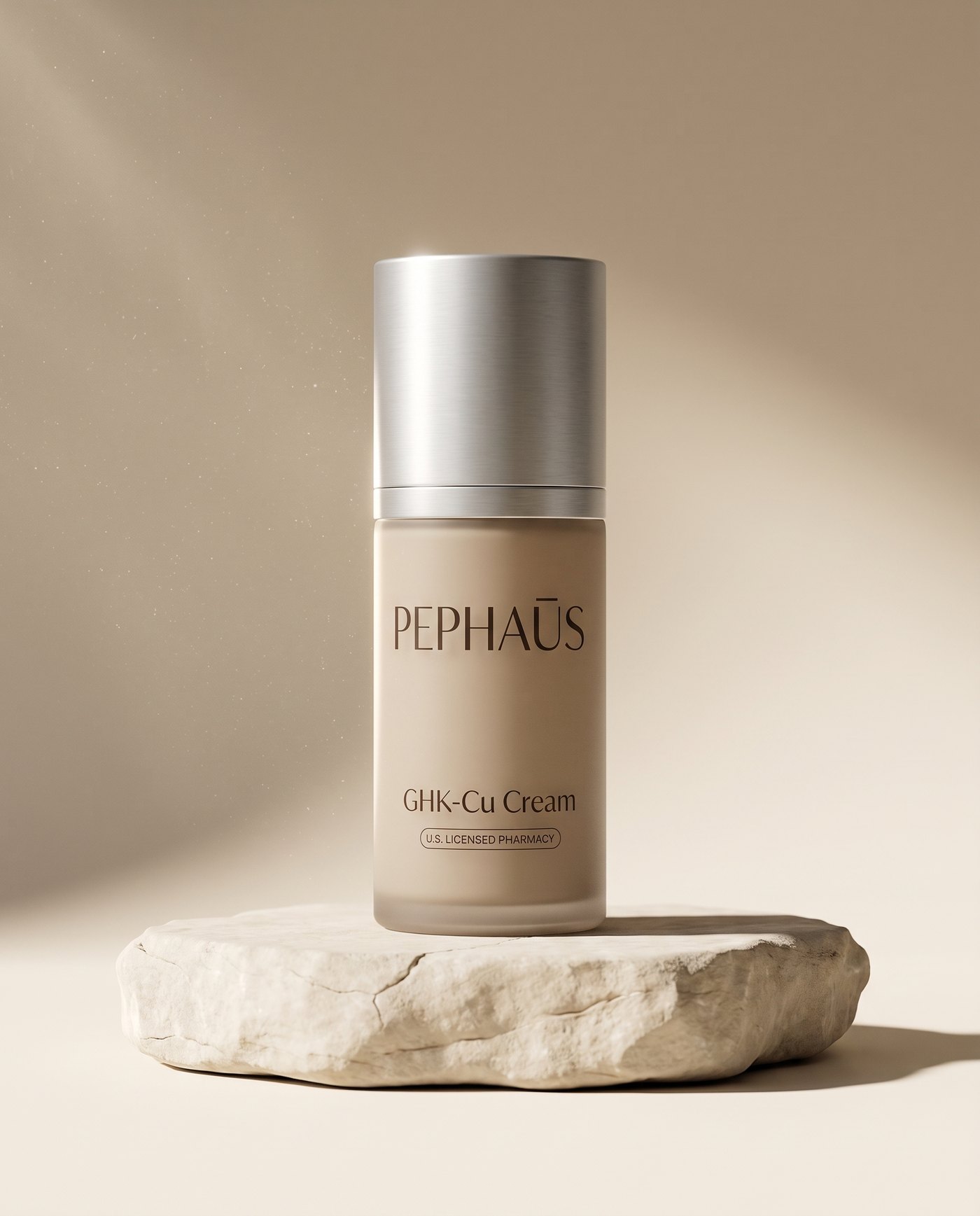
For skin on your face and neck, GHK-Cu cream is the simpler pick. It goes right where you want results, it needs no needles or mixing, and the published skin studies on GHK-Cu were done with creams applied to the face. Injections put the peptide into the body as a whole, which is a different goal and a different kind of product.
Here is how the two compare on what matters: where the peptide goes, what the research looked at, safety and sourcing, daily routine, and price.
Is this you?
Is this you?
You keep seeing GHK-Cu everywhere and want to know which form makes sense.
If you nodded at two or three of those, keep reading.
Fine lines are starting to show around your eyes and mouth
Your skin does not bounce back the way it used to
Your tone looks uneven on the face and neck
You saw GHK-Cu injections online and felt unsure about them
You do not want to mix vials or use needles for skin care
You want something a licensed provider actually reviews
You want one step that fits under sunscreen and makeup
What GHK-Cu is
GHK-Cu is a tiny copper peptide made of three amino acids bound to copper. Your body makes it naturally. Levels are highest when you are young and fall with age. In skin it works as a signal that supports collagen, elastin and repair. That is why it became one of the most studied peptides in skin care.
The cream and the injection use the same peptide. What changes is where it goes and why.
Where the peptide goes
A cream puts GHK-Cu on the skin you want to change. It works locally on the face and neck. You apply a thin layer once a day and the job is done.
An injection puts GHK-Cu under the skin somewhere on the body, often the belly. From there it spreads through the body. People who use injections are usually chasing whole body goals like recovery. If your goal is your face, an injection in your stomach is a long way from the target.
Ready when you are. Ten minutes on your phone.
Start my online visitWhat the research looked at
The skin studies most people cite tested GHK-Cu creams on the face over about 12 weeks. They reported firmer skin, softer looking fine lines and higher skin density. That is the evidence behind using GHK-Cu for skin.
Injectable GHK-Cu for skin is a newer trend driven mostly by social media and online peptide sellers. If you want the approach that matches the skin research, the cream is it.
Sourcing and safety
This is where the two forms split hard.
Most GHK-Cu injections sold online come as "research only" vials. They are not made for people, they do not come with a prescription, and nobody checks what is inside. You also have to mix the powder and inject it yourself.
PepHaūs GHK-Cu cream is compounded by a U.S.-licensed pharmacy and prescribed by a U.S.-licensed physician after a short online review. It ships ready to use. Nothing to mix. Nothing to inject.
The daily routine
With the cream your routine looks like this:
- Cleanse and pat skin dry
- Press a pea sized amount into the face and neck
- Layer moisturizer, sunscreen and makeup on top
- Repeat once a day and give it 8 to 12 weeks
With injections you are handling vials, syringes, sterile water, alcohol pads and a sharps container. For skin care most people find that is far more than they want to take on.
Which one should you choose?
Choose the cream if your goal is fine lines, firmness and tone on your face and neck. It matches the research, it is easy to stay consistent with, and it comes from a licensed pharmacy.
If you are curious about whole body goals, talk to a licensed provider before buying anything online. Skip the research vials.
You can learn more in the complete GHK-Cu guide or see how it compares with retinoids in GHK-Cu vs tretinoin.
What it costs
PepHaūs GHK-Cu cream is $149 a month, billed monthly. That includes the provider review, a 30 day supply and free expedited shipping. Cancel anytime. Nothing is charged unless you are prescribed. See the cream.
LegitScript certified
A licensed U.S. pharmacy vs the grey market
Grey market GHK-Cu vials ship from overseas sellers with no pharmacy, no provider and no testing. You cannot know the strength or how clean the vial is.
PepHaūs is LegitScript certified. Your cream is compounded for you by a licensed U.S. pharmacy and prescribed by a licensed physician.
FAQ
FAQ
Is GHK-Cu cream as good as GHK-Cu injections for skin?+
For the face and neck the cream is the form the published skin studies tested. It works where you apply it.
Can GHK-Cu cream tighten loose skin?+
Studies of GHK-Cu cream reported firmer skin and improved skin density over about 12 weeks. It supports firmness. It is not a substitute for a procedure.
How long does GHK-Cu cream take to work?+
Many people notice softer skin in the first few weeks. Firmness and fine lines change over about 8 to 12 weeks of daily use. Individual results vary.
Do I need a prescription for GHK-Cu cream?+
For the prescription strength cream from PepHaūs, yes. A licensed provider reviews your answers online first.
Can I wear makeup over GHK-Cu cream?+
Yes. Apply it first on clean skin, then moisturizer, sunscreen and makeup.
Where can I buy GHK-Cu cream?+
PepHaūs offers prescription strength GHK-Cu cream online for $149 a month with the provider review included. Start your order . Ready for smoother, firmer looking skin? Start your GHK-Cu cream order .
Start your visit from your phone
Ten minutes on your phone. A physician licensed in your state. A box on your porch in 2 to 3 business days.
See if you qualifyYour care team
Every PepHaus visit is reviewed by a licensed physician from the Wasef Health Group provider network. A doctor reads your intake, decides if treatment fits, and sets your plan.
Meet the physiciansThis article is educational and is not medical advice. Compounded medications are not FDA-approved. Treatment requires evaluation by a licensed provider.