GHK-Cu Cream How to Use: The Routine That Gets Results
Once a day on clean, dry skin. Firmer skin and smoother lines after 12 weeks.
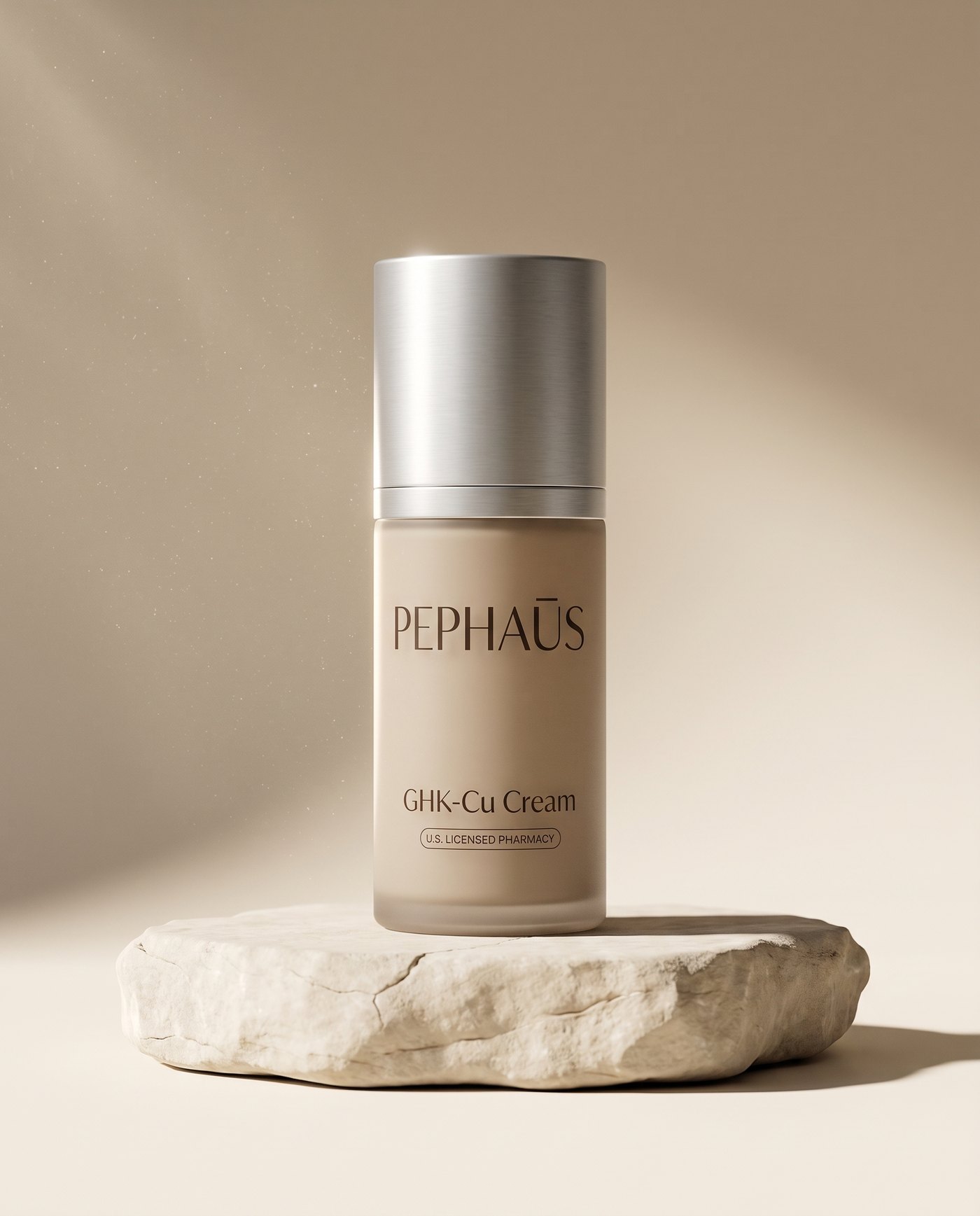
GHK-Cu copper peptide cream works best when you use it once a day on clean, dry skin, in a thin layer on your face and neck. Apply it after cleansing and before heavier moisturizers or sunscreen, and give it a few minutes to absorb. Most people use it at night, but morning application works too as long as you pair it with sunscreen during the day.
Is this you?
Is this you?
You bought GHK-Cu cream and want to know the routine that gets results. You wonder if you use it once or twice a day, morning or night, and what goes on before and after it. You heard it works better with some products and not with others. You want to see firmness and smoother skin, and you are ready to stick with it for the 12 weeks studies show it takes. If you nodded at two or three of those, keep reading.
GHK-Cu cream, prescribed online $149/mo
One thin layer a day. Provider review and shipping included. Nothing charged unless you are prescribed.
How to apply GHK-Cu cream
Cleanse your face and neck first, then pat dry. Wait a minute so your skin is fully dry, not damp. Take a pea sized amount of GHK-Cu cream and dot it on your forehead, cheeks, chin, and neck. Smooth it in with upward motions, covering your whole face and neck in a thin, even layer. The cream absorbs in two to three minutes. After it dries, you can layer other products on top.
GHK-Cu is a prescription strength copper peptide cream, so a little goes a long way. One pea sized amount covers your face and neck. Using more does not make it work faster. The copper peptide binds to your skin and signals collagen and elastin production over time. Consistency matters more than quantity. One thin layer a day, every day, gives you better results than a thick layer every few days.
Morning or night routine
Most people use GHK-Cu at night because that is when your skin repairs itself. Cleanse, apply GHK-Cu, wait a few minutes, then layer your night moisturizer and any other treatments. If you use retinoids, apply GHK-Cu in the morning and retinoids at night, or alternate nights between the two. Copper peptides and retinoids can irritate when used together at the same time.
If you prefer morning application, cleanse, apply GHK-Cu, wait for it to dry, then layer your moisturizer and sunscreen. GHK-Cu does not make your skin more sensitive to sun on its own, but sunscreen protects the collagen and elastin your skin is building. Wear SPF 30 or higher every day, whether you use GHK-Cu in the morning or at night.
Ready when you are. Ten minutes on your phone.
Start my online visitWhat to pair with GHK-Cu
Hyaluronic acid works well with GHK-Cu. Apply hyaluronic acid serum after GHK-Cu dries, then seal it with moisturizer. Hyaluronic acid hydrates, and GHK-Cu supports firmness and collagen, so they complement each other. Niacinamide can also go on after GHK-Cu. Wait a few minutes between layers so each one absorbs.
Vitamin C and strong acids like glycolic or salicylic acid can interfere with copper peptides. If you use vitamin C serum, apply it in the morning and GHK-Cu at night, or use them on opposite ends of the day. The same goes for AHA or BHA exfoliants. Space them out by at least six hours, or use acids in the morning and GHK-Cu at night.
Retinoids and GHK-Cu should not be layered at the same time. Use one in the morning and the other at night, or alternate nights. Both are active treatments that work on collagen and skin repair, and using them together can cause redness or irritation.
How long it takes to see results
Published studies of GHK-Cu cream ran about 12 weeks. Participants reported firmer skin, softer looking fine lines, and higher skin density by the end of the study period. Most people start noticing smoother texture around week four to six. Firmness and fine line improvement show up closer to week eight to twelve. Skin turnover takes time, so the full effect builds over months, not days.
If you stop using GHK-Cu after a few weeks, the collagen and elastin your skin built stays, but new production slows back to baseline. Consistent use gives you the best long term results. Many people stay on GHK-Cu for six months to a year, then take breaks or use it a few times a week for maintenance.
Under eyes and neck
You can use GHK-Cu under your eyes and on your neck. The skin under your eyes is thinner, so use a smaller amount and pat it gently instead of rubbing. Some people see less puffiness and smoother skin under their eyes after a few weeks. If irritation shows up, cut back to every other day under the eyes and keep daily use on the rest of your face.
Your neck ages as fast as your face, so treating both areas gives you more consistent results. Extend your GHK-Cu application from your jawline down to your collarbone. The same pea sized amount covers your face and neck, so you do not need extra product.
What it costs
PepHaūs GHK-Cu copper peptide cream is $149 a month, billed monthly, and you can cancel anytime. That includes the provider review, compounding by a licensed U.S. pharmacy, and free expedited shipping. One bottle is a 30 day supply when used once a day on your face and neck. No doctor fee, no membership. Learn more at /skincream.
LegitScript certified
A licensed U.S. pharmacy vs the grey market
Research grade GHK-Cu sold online without a prescription comes from overseas labs with no testing for purity or concentration. You do not know what strength you are getting or what else is in the formula. PepHaūs GHK-Cu is compounded by a U.S. licensed pharmacy after a provider reviews your skin goals and health. Every batch is tested, and the pharmacy follows FDA compounding standards. The provider visit is included, and you can message your provider anytime if you have questions.
FAQ
FAQ
How often should you use GHK-Cu cream?+
Once a day is the standard routine. Some people use it twice a day for faster results, but once a day is enough for most people. Consistency matters more than frequency. Using it every day gives better results than using it heavily a few times a week.
Can you use GHK-Cu with vitamin C?+
You can, but not at the same time. Use vitamin C in the morning and GHK-Cu at night, or space them six hours apart. Copper peptides and vitamin C can interfere with each other when layered together.
Can you use GHK-Cu with retinol?+
Yes, but not in the same routine. Use retinol at night and GHK-Cu in the morning, or alternate nights. Both are active treatments, and using them together can cause irritation.
Is GHK-Cu safe for sensitive skin?+
Most people tolerate GHK-Cu well, but sensitive skin can react to any active ingredient. Start with every other day for the first week and watch for redness or irritation. If your skin feels fine, move to daily use. If irritation shows up, cut back or stop and message your provider.
Can you use GHK-Cu on your body?+
The prescription is for face and neck use. Some people use leftover product on their hands or chest, but the bottle is sized for face and neck coverage. If you want to treat larger areas, let your provider know during your visit.
What happens if you miss a day?+
One missed day will not undo your progress. Pick up where you left off the next day and keep going. The benefits build over weeks, so consistency over time matters more than never missing a dose. GHK-Cu copper peptide cream works best with a simple routine on clean, dry skin, once a day, paired with sunscreen and spaced out from strong actives like vitamin C and retinoids. Studies show firmer skin and smoother fine lines after 12 weeks of consistent use. When you are ready to start, PepHaūs provides everything from the provider review to the cream shipped to your door. Learn more at /skincream .
Start your visit from your phone
Ten minutes on your phone. A physician licensed in your state. A box on your porch in 2 to 3 business days.
See if you qualifyYour care team
Every PepHaus visit is reviewed by a licensed physician from the Wasef Health Group provider network. A doctor reads your intake, decides if treatment fits, and sets your plan.
Meet the physiciansThis article is educational and is not medical advice. Compounded medications are not FDA-approved. Treatment requires evaluation by a licensed provider.