GHK-Cu and Hyaluronic Acid: How to Layer for Skin Repair and Hydration
GHK-Cu and hyaluronic acid layer together for repair and hydration.
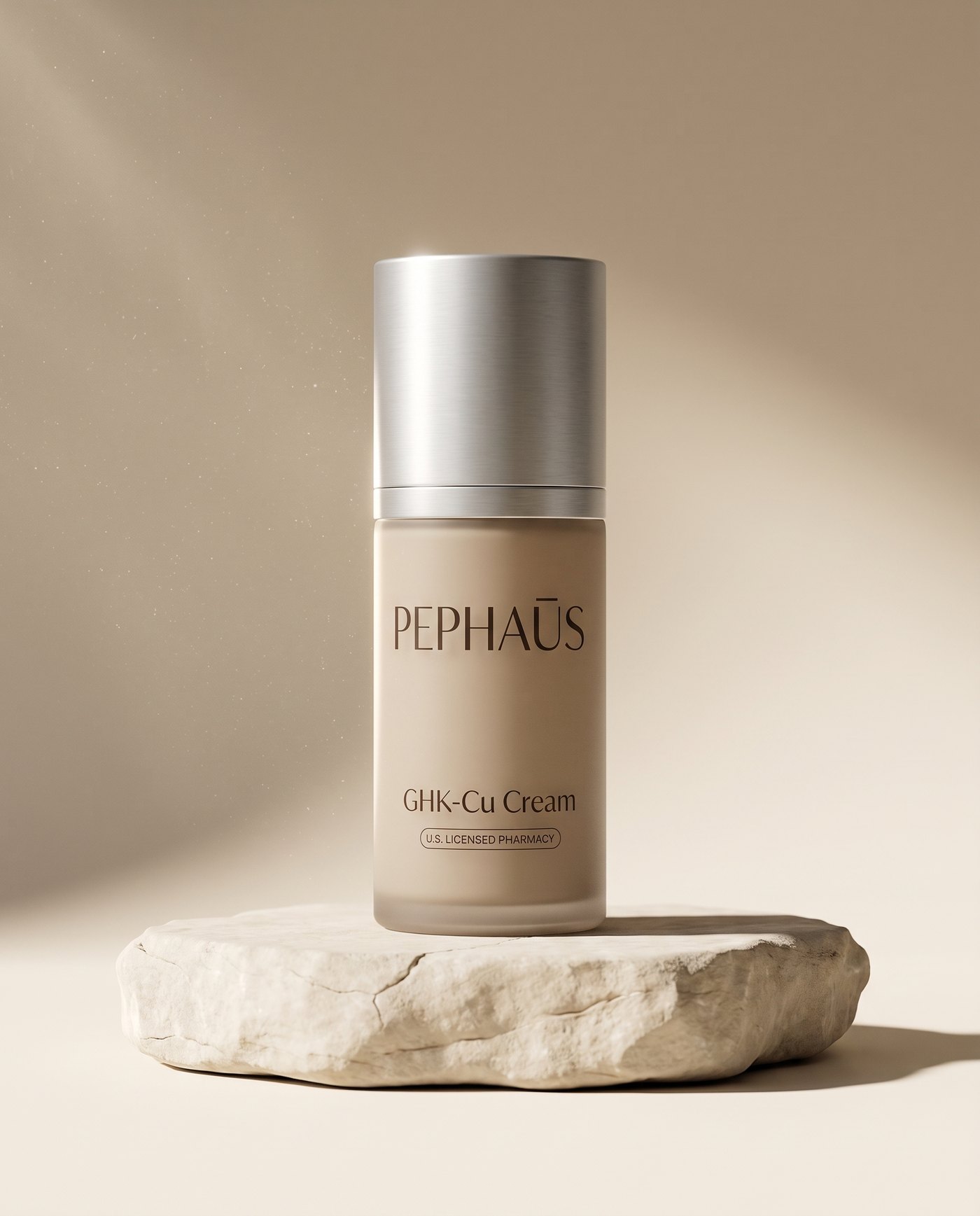
GHK-Cu and hyaluronic acid are two ingredients that work well together when you layer them correctly. GHK-Cu is a copper peptide that supports collagen production and skin repair. Hyaluronic acid is a humectant that pulls water into your skin and holds it there. One repairs and the other hydrates. Layering them in the right order lets each ingredient do its job without interfering with the other.
Is this you?
Is this you?
Your skin feels dehydrated even when you use moisturizer. Fine lines show up more when your skin is dry. You want to support collagen production but also need serious hydration. You have GHK-Cu cream and hyaluronic acid serum but you are not sure which goes first. You tried layering them randomly and your skin felt sticky or pilled. You want a simple routine that addresses repair and hydration at the same time. If two or three of those sound familiar keep reading.
GHK-Cu cream, prescribed online $149/mo
One thin layer a day. Provider review and shipping included. Nothing charged unless you are prescribed.
Why GHK-Cu and hyaluronic acid work together
GHK-Cu stimulates fibroblasts which are the cells that make collagen and elastin. It also reduces inflammation and supports wound healing. Those effects take time to show up because collagen production is a slow process. Hyaluronic acid works immediately by binding water to the surface and deeper layers of your skin. It creates a plump hydrated base that makes fine lines less visible right away. When you layer GHK-Cu and hyaluronic acid together the hyaluronic acid keeps your skin hydrated while the GHK-Cu works on repair over weeks and months. Dehydrated skin shows fine lines and texture more. Keeping your skin hydrated with hyaluronic acid makes the repair effects of GHK-Cu more visible. The two ingredients do not interfere with each other because they work through different mechanisms. GHK-Cu penetrates into the dermis where collagen is made. Hyaluronic acid sits in the epidermis and dermis and holds water. Layering them in the right order lets both reach where they need to go.
The correct layering order
Apply products from thinnest to thickest. Hyaluronic acid serum goes first because it is water based and thin. GHK-Cu cream goes second because it is thicker and often contains oils or emollients. If you reverse the order and put GHK-Cu cream on first the hyaluronic acid serum may not penetrate well. The cream creates a barrier that blocks the serum from reaching your skin. Here is the step by step. Cleanse your face and pat it dry until it is still slightly damp. Apply three to four drops of hyaluronic acid serum to your face and neck. Spread it evenly and let it sit for 30 seconds to one minute. It does not need to dry completely but it should not feel wet. Then apply a pea sized amount of GHK-Cu cream over the serum. Spread it evenly and let it absorb. Wait two to three minutes before applying sunscreen in the morning or a heavier moisturizer at night if you need more hydration. The hyaluronic acid goes on damp skin because it pulls water from the air and from your skin. If your skin is bone dry the hyaluronic acid has nothing to bind to and it can actually pull water out of your deeper skin layers which makes dryness worse. A damp face or a humid environment gives the hyaluronic acid the water it needs to work.
Ready when you are. Ten minutes on your phone.
Start my online visitMorning vs night routine
You can use GHK-Cu and hyaluronic acid together in the morning or at night or both. The order stays the same. In the morning apply hyaluronic acid serum then GHK-Cu cream then sunscreen. Sunscreen goes last because it needs to sit on top of everything to protect your skin. If you put other products over sunscreen you dilute it and reduce protection. At night apply hyaluronic acid serum then GHK-Cu cream then a heavier moisturizer if your skin needs it. Some people use GHK-Cu only at night because they want to keep their morning routine simple. That works fine. GHK-Cu does not need to be applied twice a day to be effective. Once a day at night is enough for most people. If your skin is very dry or if you live in a dry climate you might want to apply hyaluronic acid twice a day for extra hydration. You can use it in the morning and at night even if you only use GHK-Cu once.
What results to expect and when
Hyaluronic acid results show up immediately. Your skin feels more hydrated and plump within minutes. Fine lines that are caused by dehydration look less visible right away. GHK-Cu results take longer. You might notice your skin looks calmer and less red within a few days because GHK-Cu reduces inflammation. Improvements in fine lines and texture from increased collagen take four to eight weeks. Collagen production is slow and old collagen takes time to break down and be replaced by new collagen. Consistent use is what gets results. Using GHK-Cu and hyaluronic acid together once or twice a day for two months gives you the best chance of seeing visible improvement. If you stop using them your skin goes back to where it was. Hyaluronic acid benefits disappear as soon as you stop because it only hydrates while it is on your skin. GHK-Cu benefits fade more slowly but collagen production drops back to baseline without continued use.
What to avoid when layering
Do not use GHK-Cu and hyaluronic acid with strong acids like glycolic acid or salicylic acid in the same routine. Acids lower the pH of your skin which can destabilize the copper peptide and make it less effective. If you use acids for exfoliation apply them at night and use GHK-Cu and hyaluronic acid in the morning. Or use acids two or three nights a week and use GHK-Cu and hyaluronic acid on the other nights. Do not use GHK-Cu and hyaluronic acid with retinol in the same routine unless your skin tolerates it well. Retinol and GHK-Cu together can increase irritation for some people. If you want to use both try GHK-Cu in the morning and retinol at night. That way they do not interact. Do not layer too many products. If you pile on five or six serums and creams your skin may not absorb any of them well. Products sit on top of each other and pill or feel sticky. Stick to a simple routine. Cleanser then hyaluronic acid serum then GHK-Cu cream then sunscreen or moisturizer. That is enough.
Choosing the right hyaluronic acid serum
Look for a hyaluronic acid serum with multiple molecular weights. Hyaluronic acid comes in different sizes. Low molecular weight hyaluronic acid penetrates deeper into your skin. High molecular weight hyaluronic acid sits on the surface and hydrates there. A serum with both gives you hydration at multiple levels. Avoid serums with a long list of extracts and fragrances. Those ingredients do not add much and they increase the risk of irritation. A simple hyaluronic acid serum with a few supporting ingredients like glycerin or panthenol works just as well as a complicated formula. Check the ingredient list. Hyaluronic acid should be listed as sodium hyaluronate or hyaluronic acid in the first few ingredients. If it is near the end of the list the concentration is probably too low to do much.
Choosing the right GHK-Cu cream
GHK-Cu cream should list the peptide in the first few ingredients. Look for a concentration of 1% to 3% GHK-Cu. Higher concentrations do not necessarily work better and they cost more. Avoid GHK-Cu products with a lot of fragrances or essential oils. Those ingredients can irritate your skin and they do not add any benefit. A simple formula with GHK-Cu and a few supporting ingredients like peptides or antioxidants is better than a formula with 20 ingredients. GHK-Cu is sensitive to light and air. It should come in an opaque pump bottle or airless container. If it comes in a jar that you dip your fingers into the peptide will break down faster. PepHaus GHK-Cu cream is formulated at 3% GHK-Cu in a simple base that supports penetration without irritation. It comes in an airless pump to keep the peptide stable.
GHK-Cu and hyaluronic acid for sensitive skin
Both GHK-Cu and hyaluronic acid are generally well tolerated by sensitive skin. GHK-Cu reduces inflammation which makes it helpful for redness and irritation. Hyaluronic acid is a gentle hydrator that works for most skin types. If your skin is very sensitive start with GHK-Cu every other night and hyaluronic acid every morning. Once your skin adjusts you can use GHK-Cu every night. If you notice stinging or redness stop using the products and let your skin calm down for a few days. Then try again with a smaller amount. A pea sized amount of GHK-Cu cream is enough for your whole face. Using more does not give you better results and it can increase irritation.
FAQ
FAQ
Can I use GHK-Cu and hyaluronic acid if I have oily skin?+
Yes. Oily skin still needs hydration. Dehydrated oily skin overproduces oil to compensate for lack of water. Hyaluronic acid hydrates without adding oil. GHK-Cu supports collagen production which helps with pores and texture. If your skin is oily skip the heavy moisturizer at the end. Just use hyaluronic acid serum then GHK-Cu cream then sunscreen in the morning. At night use hyaluronic acid serum then GHK-Cu cream and stop there if your skin does not need more.
Do I need to refrigerate GHK-Cu cream?+
No. GHK-Cu cream should be stored at room temperature in a cool dry place. Refrigerating it does not extend its shelf life and it can change the texture of the cream. Keep the cap tightly closed and store it away from direct sunlight. An opaque airless pump container protects the peptide from light and air which keeps it stable.
Can I use GHK-Cu and hyaluronic acid around my eyes?+
Yes. Both ingredients are safe to use around your eyes. The skin around your eyes is thinner and more delicate so use a smaller amount. A tiny dab of hyaluronic acid serum followed by a tiny dab of GHK-Cu cream is enough. Pat the products gently into your skin. Do not rub or pull. If the products get into your eyes and cause stinging rinse with water.
How long does a bottle of GHK-Cu cream last?+
One bottle of GHK-Cu cream lasts about two months when used once a day. A pea sized amount is enough for your face and neck. If you use it twice a day it will last about one month. Using more does not give you better results. A thin layer is all you need.
Can I use GHK-Cu and hyaluronic acid with niacinamide?+
Yes. Niacinamide is a gentle ingredient that supports skin barrier function and reduces redness. It layers well with GHK-Cu and hyaluronic acid. Apply hyaluronic acid serum then a niacinamide serum if you use one then GHK-Cu cream. The order is thinnest to thickest.
Can I mix GHK-Cu cream and hyaluronic acid serum together?+
No. Do not mix them together before applying. Layering them separately in the correct order ensures each ingredient reaches where it needs to go. Mixing them together dilutes both products and may affect how well they penetrate.
Will hyaluronic acid make my skin produce less natural hyaluronic acid?+
No. Topical hyaluronic acid does not stop your skin from making its own. Your skin produces hyaluronic acid naturally and that production slows with age. Topical hyaluronic acid supplements what your skin is not making anymore. It does not make your skin dependent on it. GHK-Cu and hyaluronic acid work together for skin repair and hydration when you layer them correctly. Hyaluronic acid serum goes first then GHK-Cu cream then sunscreen or moisturizer. Keep the routine simple and consistent. PepHaus offers GHK-Cu cream at 3% concentration in an airless pump for stability and ease of use. Start today at thepephaus.com/ghk-cu or read more at the GHK-Cu Guide and GHK-Cu Cream: What to Expect .
Start your visit from your phone
Ten minutes on your phone. A physician licensed in your state. A box on your porch in 2 to 3 business days.
See if you qualifyYour care team
Every PepHaus visit is reviewed by a licensed physician from the Wasef Health Group provider network. A doctor reads your intake, decides if treatment fits, and sets your plan.
Meet the physiciansThis article is educational and is not medical advice. Compounded medications are not FDA-approved. Treatment requires evaluation by a licensed provider.