Copper Peptides with Niacinamide: How to Layer Them
GHK-Cu and niacinamide work well together when you layer them correctly or use them at different times.
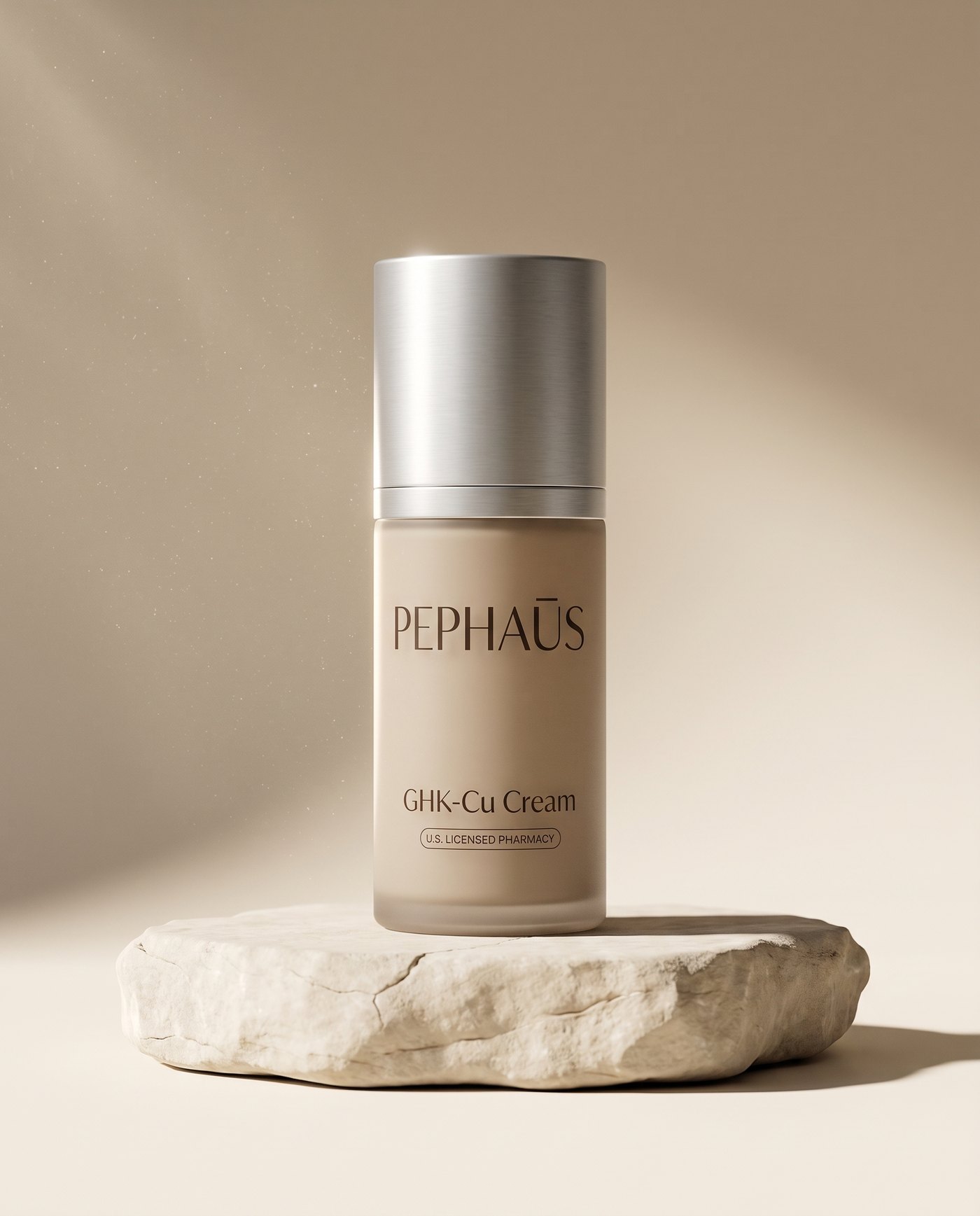
Copper peptides and niacinamide can be used together in your skincare routine. They work through different mechanisms and do not interfere with each other when layered properly. GHK-Cu is a tripeptide bound to copper that supports collagen and elastin production. Niacinamide is a form of vitamin B3 that helps with skin barrier function, tone, and texture. The key is timing and order. Use them at different times of day or wait at least 10 minutes between applications if you layer them in one routine.
Is this you?
Is this you?
You use niacinamide in your routine and you want to add GHK-Cu cream. You have heard copper peptides and niacinamide might not mix and you want to know if that is true. You wonder which one goes first, whether you can use them in the same routine, or if you should use one in the morning and one at night. You want a simple layering guide that actually works. If you nodded at two or three of those, keep reading.
GHK-Cu cream, prescribed online $149/mo
One thin layer a day. Provider review and shipping included. Nothing charged unless you are prescribed.
How GHK-Cu and niacinamide work differently
GHK-Cu is a tripeptide your body makes naturally. It binds to copper and supports collagen synthesis, elastin production, and skin repair. Studies of GHK-Cu cream ran about 12 weeks and reported firmer skin, softer looking fine lines, and higher skin density. You apply it as a thin pea-sized layer on clean dry skin once a day.
Niacinamide is a water-soluble form of vitamin B3. It strengthens the skin barrier, evens tone, reduces the appearance of pores, and supports ceramide production. Niacinamide works well with most ingredients and is often used morning and night in serums or moisturizers.
Both ingredients support skin health, but they do it through different pathways. GHK-Cu works on collagen and elastin. Niacinamide works on barrier function and tone. Using both together gives you the benefits of each.
Can you layer them in the same routine?
Yes, but timing matters. Some sources say niacinamide can chelate copper and reduce GHK-Cu's effectiveness. This is more of a concern in formulations where both are mixed together in high concentrations. When you layer them as separate products, the risk is much lower. Wait at least 10 minutes between applications so the first product absorbs and the pH stabilizes before you apply the next one.
Many people prefer to use one in the morning and one at night. This avoids any potential interaction and keeps your routine simple. GHK-Cu is often applied at night because that is when your skin does most of its repair work. Niacinamide can go in the morning under sunscreen or in the evening if you prefer.
Ready when you are. Ten minutes on your phone.
Start my online visitThe layering order when using both
If you layer them in the same routine, apply the thinner, more water-based product first, then the thicker one. Niacinamide serums are often water-based and go on before creams. GHK-Cu cream from PepHaūs is a prescription strength topical. It goes on clean dry skin as a thin layer.
A common order is cleanse, wait for skin to dry completely, apply niacinamide serum, wait 10 minutes, then apply GHK-Cu cream. Follow with moisturizer and sunscreen in the morning or just moisturizer at night. If your GHK-Cu cream is rich enough, you may not need additional moisturizer.
Morning or night for each
GHK-Cu cream works well at night. Your skin repairs itself while you sleep, and GHK-Cu supports that process. Apply it on clean dry skin before bed, under your regular moisturizer if needed. One thin pea-sized layer covers your face and neck.
Niacinamide works morning or night. Many people use it in the morning under sunscreen because it supports barrier function and helps protect against environmental stress. You can also use it at night if your morning routine is already full.
If you want to use both daily without layering them in the same routine, use niacinamide in the morning and GHK-Cu at night. This keeps things simple and avoids any timing concerns.
What to avoid pairing with GHK-Cu
Pair GHK-Cu with vitamin C and strong acids like glycolic or salicylic acid at a different time of day. Vitamin C and acids can destabilize copper peptides or change the pH enough to reduce effectiveness. Use vitamin C in the morning and GHK-Cu at night, or alternate days.
Retinoids can be used with GHK-Cu, but not at the same time. Many people use GHK-Cu in the morning and retinoids at night, or GHK-Cu on some nights and retinoids on others. If your skin tolerates both, you can apply GHK-Cu first, wait 20 to 30 minutes, then apply your retinoid. Start slowly to see how your skin responds.
What to expect in the first weeks
GHK-Cu takes time. Published studies ran about 12 weeks. Many people report smoother texture and firmer looking skin around week four to eight. Fine lines soften. Skin feels more hydrated. Tone looks more even. Individual results vary. GHK-Cu supports collagen production, which takes weeks to show visible changes.
Niacinamide works faster. Many people see improvements in tone, texture, and barrier function within the first two to four weeks. Redness calms down. Pores look smaller. Skin feels stronger and less reactive.
Using both together gives you the quick barrier and tone benefits of niacinamide plus the longer-term firmness and collagen support from GHK-Cu.
What it costs
PepHaūs GHK-Cu cream is $149 a month, billed monthly, and you can cancel anytime. One tube is a 30-day supply. A licensed U.S. physician reviews your information and a licensed U.S. pharmacy compounds the cream after it is prescribed. Provider visit and free expedited shipping are included. See GHK-Cu cream for details.
FAQ
FAQ
Does niacinamide cancel out GHK-Cu?+
No. Niacinamide can chelate copper in high concentrations when mixed in the same formulation, but layering them as separate products with a wait time between them avoids this. Many people use both without issues.
Can you mix GHK-Cu and niacinamide in the same bottle?+
No. Do not mix them. Use them as separate products and layer them with a wait time, or use one in the morning and one at night.
What order should they go in?+
Apply the thinner product first. If your niacinamide is a serum and your GHK-Cu is a cream, niacinamide goes first. Wait 10 minutes, then apply GHK-Cu.
Can you use them every day?+
Yes. GHK-Cu is used once a day. Niacinamide can be used once or twice a day. Many people use niacinamide morning and night, and GHK-Cu at night.
What if you already use vitamin C and retinoids?+
Use vitamin C in the morning, GHK-Cu mid-day or at a different time, and retinoids at night. Or alternate days. Do not layer vitamin C and GHK-Cu in the same routine.
Does GHK-Cu work better with or without niacinamide?+
GHK-Cu works on its own. Niacinamide adds barrier support and tone benefits. Using both gives you the benefits of each. Whether you use both depends on your skin goals.
How long does it take to see results from using both?+
Niacinamide shows results in two to four weeks. GHK-Cu takes longer, around eight to twelve weeks for visible firmness and collagen changes. Using both gives you quicker tone and texture improvements from niacinamide while GHK-Cu builds collagen support over time. Copper peptides and niacinamide work well together when layered properly. Use them at different times of day for simplicity, or wait 10 minutes between them if layering in one routine. A licensed physician can prescribe GHK-Cu cream after reviewing your information. Start by visiting GHK-Cu cream to get started.
Start your visit from your phone
Ten minutes on your phone. A physician licensed in your state. A box on your porch in 2 to 3 business days.
See if you qualifyYour care team
Every PepHaus visit is reviewed by a licensed physician from the Wasef Health Group provider network. A doctor reads your intake, decides if treatment fits, and sets your plan.
Meet the physiciansThis article is educational and is not medical advice. Compounded medications are not FDA-approved. Treatment requires evaluation by a licensed provider.