Is Compounded Semaglutide Safe?
An honest answer to a common question. Safety depends less on the word compounded and more on who makes it and who prescribes it.
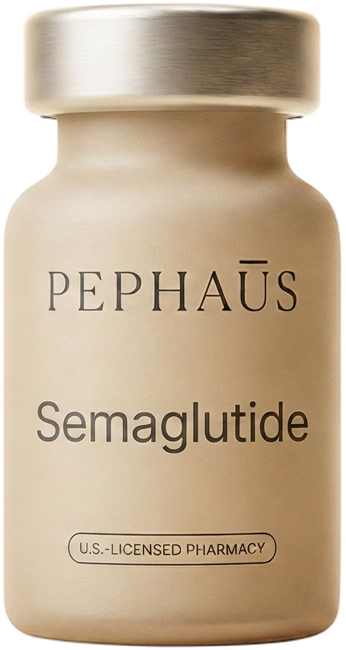
It is a fair question, and it deserves an honest answer rather than a sales pitch. The safety of compounded semaglutide depends less on the word compounded and more on who prepares it, who prescribes it, and whether you can verify what is in the vial.
Is this you?
Sound familiar?
You are wiped out after every meal.
You snack at night and hate it in the morning.
The 3 pm slump hits like a wall.
Your favorite jeans live in the back of the closet.
You have tried every diet and the scale will not move.
Clinic visits and waiting rooms do not fit your life.
You work shifts, or the nearest specialist is an hour away.
You want your energy back and to feel like yourself again.
If you nodded at two or three of those, this was built for you. Keep going.
What compounding actually is
Compounding is the practice of a licensed pharmacy preparing a medication to fill a prescription. It is a long-standing, regulated part of pharmacy in the United States. A compounded medication is made by a pharmacist using the same active ingredient found in the standard drug. With semaglutide, that ingredient is semaglutide.
One thing to be clear about: compounded medications are not FDA-approved as finished products. That is a real distinction, and a provider walks through what it means before you start. Our explainer on what compounded tirzepatide is covers the same logic in detail and applies to semaglutide too.
Safety rests on three things
Whether any compounded medication is safe comes down to three pillars.
A licensed prescriber. A U.S.-licensed provider should review your medical history and decide whether semaglutide is appropriate for you. That review catches contraindications and sets the right starting dose. Without it, there is no safety check at all.
A licensed pharmacy. The medication should be prepared by a U.S.-licensed compounding pharmacy with real quality controls, not an anonymous source. A legitimate pharmacy is transparent about who they are.
Testing you can see. Each batch should ship with a Certificate of Analysis reporting purity and concentration. You should be able to verify what is in the vial rather than trust a claim.
When all three are present, you know what you are putting in your body and who stands behind it.
Ready when you are. Ten minutes on your phone.
Start my online visitThe unsafe version
The danger is not the word compounded. It is sourcing semaglutide from somewhere that skips those pillars. Sites selling vials labeled research only or not for human use have no prescriber, often no per-batch testing, and no accountability. The molecule may carry the same name, but everything about how it reached you is different. That is the version to avoid, and a very low price is usually the tell.
What about side effects
Like any GLP-1, semaglutide has side effects, most commonly gastrointestinal ones such as nausea and reduced appetite, especially as the dose ramps up. These tend to ease as your body adjusts, and a provider helps you manage them by starting low and stepping up slowly. There are also situations where semaglutide is not appropriate, which is exactly why the provider review matters. A licensed provider can decline to prescribe if your history makes it a poor fit, and in that case you are not charged for medication.
The honest bottom line
Compounded semaglutide can be a reasonable, safe option when it comes from a licensed provider and a licensed pharmacy with testing you can verify. It is not safe when sourced from a site that skips those steps. The word compounded is not the risk. The source is. You can see how a legitimate program works on our how it works page and our weight loss program, or start a visit to have a provider weigh in.
How to verify a source yourself
You do not have to take a program's word for its quality. You can check it. Ask for the Certificate of Analysis for your batch and read it: it should report the purity and concentration of the semaglutide you received. Confirm the prescriber is a U.S.-licensed provider and that the medication is prepared by a U.S.-licensed compounding pharmacy. A legitimate program is transparent about all of this and does not treat the questions as an imposition.
The inverse is just as telling. If a source cannot produce a Certificate of Analysis, will not say who the prescriber is, or sells without any medical review, you have learned what you need to know. A source that welcomes that scrutiny is telling you it has nothing to hide.
Why the provider review is the real safeguard
It is easy to focus on the pharmacy and the testing and overlook the most important safety step: the provider review. Semaglutide is not appropriate for everyone, and there are histories and conditions where it should not be used. A licensed provider reviewing your intake is the check that catches those situations before treatment starts.
That is also why a program where you can simply add a vial to a cart and buy it, with no medical review, is fundamentally unsafe regardless of where the medication came from. The review is not red tape. It is the part of the process designed to protect you, and a provider who declines to prescribe when it is not a good fit is doing their job, not failing to make a sale.
The word compounded is not the risk
It is worth saying plainly, because the framing trips people up. Compounding itself is a long-standing, regulated part of pharmacy, not a red flag. A compounded medication from a licensed pharmacy, prescribed by a licensed provider, with testing you can see, is a legitimate medical product. The risk lives entirely in the source, in whether those safeguards are present. Judge a compounded option by its prescriber, its pharmacy, and its testing, not by the word on the label, and you will be asking the right questions.
FAQ
Frequently asked questions
Is compounded semaglutide FDA-approved?+
No. Compounded medications are not FDA-approved finished products. They are prepared by a licensed pharmacy to fill a prescription, and a provider reviews whether the treatment fits you before you start.
How do I know a compounded source is safe?+
Look for three things: a U.S.-licensed prescriber, a U.S.-licensed compounding pharmacy, and a Certificate of Analysis with each batch showing purity and concentration. If any are missing, treat the source as unsafe.
What are the main side effects?+
The most common are gastrointestinal, such as nausea and reduced appetite, especially as the dose increases. They tend to ease as your body adjusts. A provider helps you manage them and decides whether semaglutide is appropriate in the first place.
Can a provider refuse to prescribe it?+
Yes, and that is part of what makes the process safe. A licensed provider can decline if your history makes semaglutide a poor fit. If they decline, you are not charged for medication.
Start your visit from your phone
Ten minutes on your phone. A physician licensed in your state. A box on your porch in 2 to 3 business days.
See if you qualifyYour care team
Every PepHaus visit is reviewed by a licensed physician from the Wasef Health Group provider network. A doctor reads your intake, decides if treatment fits, and sets your plan.
Meet the physiciansThis article is educational and is not medical advice. Compounded medications are not FDA-approved. Treatment requires evaluation by a licensed provider.