How Much Does Compounded Tirzepatide Cost?
What you actually pay for compounded tirzepatide, what that price includes, and why cash-pay is simpler than it sounds.
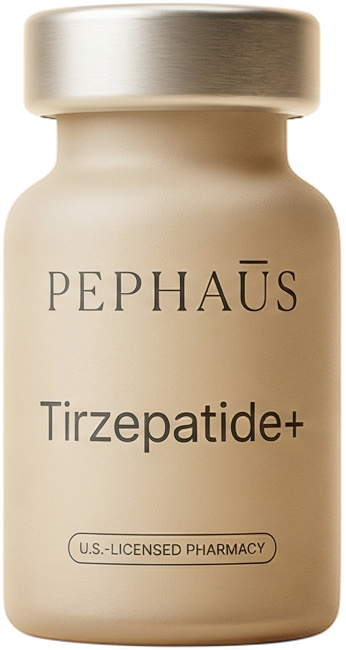
The first question most people have about tirzepatide is a fair one. What does it cost? The honest answer is that it depends on a few things, but a compounded option is usually simpler to price than you might expect, because it is cash-pay from the start.
Is this you?
Sound familiar?
You are wiped out after every meal.
You snack at night and hate it in the morning.
The 3 pm slump hits like a wall.
Your favorite jeans live in the back of the closet.
You have tried every diet and the scale will not move.
Clinic visits and waiting rooms do not fit your life.
You work shifts, or the nearest specialist is an hour away.
You want your energy back and to feel like yourself again.
If you nodded at two or three of those, this was built for you. Keep going.
Why cash-pay changes the math
Brand-name medications run through insurance. That means prior authorizations, copays that vary by plan, and the chance of a claim coming back denied. The sticker number you see is rarely the number you pay, and you often do not know the final figure until the pharmacy runs it.
Compounded tirzepatide works differently. It is cash-pay, which means a flat price set up front. There is no insurance to bill, no prior authorization to wait on, and no claim to chase. You see one number, and that number is what you pay.
For a lot of people that clarity is the point. You can plan around a known cost rather than guess at a moving one.
Pricing
What goes into the price
A compounded tirzepatide program is not just the vial. The price reflects a few things bundled together.
First is the clinical visit. A U.S.-licensed provider reviews your medical history and decides whether tirzepatide is appropriate for your goals. That review is real, not a formality. If the provider decides treatment is not right for you, you are not charged for medication.
Second is the medication itself, prepared by a licensed compounding pharmacy. Compounded tirzepatide is made by a pharmacist using the same active ingredient found in the standard drug. Compounded medications are not FDA-approved as finished products, and a provider walks through what that means before you start.
Third is everything around the medication. Shipping to your door, refills handled through a client portal, and a care team you can message. A Certificate of Analysis ships with each batch so you can see purity and concentration for yourself.
Pricing in your door
One price. Provider visit, medication and shipping included.
- First month$239
- 3-month plan$227/mo
- 6-month plan$215/mo
- First month$169
- 3-month plan$160/mo
- 6-month plan$152/mo
- Provider visit
- Medication
- Cold shipping to your door
- Refills on a schedule
- Care team messaging
- Cancel anytime online
Pricing
How dose affects cost
Tirzepatide is taken as a weekly injection, and the dose usually starts low and steps up over time. A provider sets the schedule based on how you respond. Because the dose changes across the early months, the amount of medication in a given month can change too. Most programs are priced as a clear monthly plan so the number stays predictable even as the dose moves. If you want the full picture of how dosing ramps, our guide to the tirzepatide dosage schedule walks through it step by step.
Pricing in your door
One price. Provider visit, medication and shipping included.
- First month$239
- 3-month plan$227/mo
- 6-month plan$215/mo
- First month$169
- 3-month plan$160/mo
- 6-month plan$152/mo
- Provider visit
- Medication
- Cold shipping to your door
- Refills on a schedule
- Care team messaging
- Cancel anytime online
What to compare when you shop
Price alone is a thin way to judge a program. A few things matter just as much as the number.
Look for a U.S.-licensed prescriber and a U.S.-licensed compounding pharmacy. Look for per-batch testing you can actually see, not a vague promise of quality. Be cautious of anything sold as research material or labeled not for human use. Those skip the prescriber, skip the testing, and are not a medical product at all. A low price there is not a deal. It is a different thing entirely.
You can read more about how a legitimate program is structured in our explainer on what compounded tirzepatide is, and you can see how the visit works on our how it works page.
Ready when you are. Ten minutes on your phone.
Start my online visitWhat PepHaus charges
We publish the whole ladder, and every number is all-inclusive. $239 a month billed monthly with no commitment. $227 a month effective on the quarterly plan, billed $681 every 3 months. $215 a month effective on the 6-month plan, billed $1,291, which saves $144 against monthly pricing. Every plan includes the online provider visit, compounded tirzepatide with B12 from a licensed U.S. compounding pharmacy, pre-measured supplies, cold shipping and ongoing provider access. The physician visit costs you nothing extra, PepHaus covers it. You are charged for medication only if a physician prescribes it, and you can cancel anytime.
For the wider market in 2026, compounded tirzepatide programs from legitimate telehealth providers commonly land between $199 and $400 a month depending on the company, the dose and the plan length. The brand-name pens run $1,000 or more a month cash without insurance coverage.
See current tirzepatide pricing and plans on the product page.
The simple version
Compounded tirzepatide is cash-pay, so you pay one clear monthly price that covers the provider visit, the medication from a licensed pharmacy, shipping, and ongoing care. There is no insurance maze and no surprise bill. What you see is what you pay. When you are ready, you can start a visit and a provider takes it from there.
How it compares to a brand-name route
It helps to put the two paths side by side. A brand-name product runs through your insurance, which sounds like savings until you account for the friction. There is the deductible to meet, the copay that depends on your plan, the prior authorization that may or may not clear, and the chance the medication is not covered for weight at all. People often spend weeks on the phone before they know their actual cost.
The compounded, cash-pay route trades that uncertainty for a single number. You do not save money by gaming a formulary or hoping a claim clears. You pay a flat monthly price and you know it in advance. For many people the value is not just the dollar figure but the absence of surprises.
FAQ
Frequently asked questions
Does insurance cover compounded tirzepatide?+
No. Compounded tirzepatide is a cash-pay treatment, which means you pay a flat price directly rather than billing insurance. That removes prior authorizations and surprise copays, but it also means you should not expect reimbursement.
Does the price change as my dose increases?+
Most programs are priced as a steady monthly plan, so the cost stays predictable even as your provider steps the dose up over the first several months. Your provider sets the schedule based on how you respond.
Am I charged if the provider says no?+
No. If a licensed provider reviews your history and decides tirzepatide is not appropriate for you, you are not charged for medication. The clinical review is a real decision, not a rubber stamp.
Is a cheaper source online a good deal?+
Be careful. Vials sold as research material or labeled not for human use skip the prescriber and the testing entirely. A low price there does not buy you the same thing. A legitimate program includes a licensed provider, a licensed pharmacy, and testing you can see.
Start your visit from your phone
Ten minutes on your phone. A physician licensed in your state. A box on your porch in 2 to 3 business days.
See if you qualifyYour care team
Every PepHaus visit is reviewed by a licensed physician from the Wasef Health Group provider network. A doctor reads your intake, decides if treatment fits, and sets your plan.
Meet the physiciansThis article is educational and is not medical advice. Compounded medications are not FDA-approved. Treatment requires evaluation by a licensed provider.