NAD+ Injections: What the Evidence Shows
A coenzyme in every cell, a lot of hype, and a real research picture. Here is the honest version.
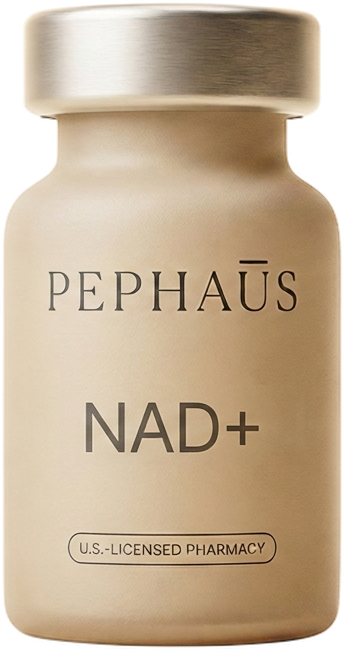
NAD+ shows up everywhere in longevity conversations, and the claims run hot. It helps to separate what is well established from what is still early. The molecule is really important. Some of the marketing around it gets ahead of the science.
Is this you?
Sound familiar?
Your energy fades by mid afternoon no matter how you slept.
Coffee does less than it used to.
Focus slips during the workday and you feel it.
Workouts take longer to recover from than they did five years ago.
You want to feel like yourself again without a clinic visit.
You want a real prescription, not a capsule from an ad.
If you nodded at two or three of those, this was built for you. Keep going.
What NAD+ is
NAD+ stands for nicotinamide adenine dinucleotide. It is a coenzyme found in every living cell, and it is central to how cells turn food into usable energy (NIH).
It also plays a role in DNA repair and in the activity of proteins involved in cellular maintenance. NAD+ levels are known to decline with age, which is part of why it draws so much interest in the longevity field (NIH).
That much is solid biology. NAD+ matters to the cell. Its levels fall over time.
Why injections, and what they aim to do
The idea behind NAD+ injections is to raise available NAD+ directly. An injection bypasses digestion, which oral forms have to survive.
People pursue NAD+ for energy, metabolism, and general cellular support. Those are the common reasons reported, and they line up with NAD+'s role in energy production (NIH).
It is worth being plain here. Human research on injected NAD+ for these everyday goals is still developing. The mechanism is well understood. Large, long-term human trials on the specific outcomes people want are limited.
Ready when you are. Ten minutes on your phone.
Start my online visitWhat is proven, and what is not
Established: NAD+ is essential to cellular energy and repair, and its levels decline with age (NIH).
The size and durability of benefits from raising NAD+ through injections, for things like energy and aging, in healthy people. The science is promising and active. Anyone who promises a certain outcome is overselling it.
That honesty is the point. NAD+ is a serious molecule with a real research base and real open questions. Both things are true at once.
How it fits with other goals
Some people use NAD+ for energy support alongside a weight program, when appetite is lower and they want to feel steady. Others use it on its own as part of a longevity routine.
Either way, it is prescribed and dosed by a licensed provider after an online visit. Compounded NAD+ is not FDA-approved, and a provider decides whether it is appropriate for you. Your provider can also tell you what is reasonable to expect, rather than what a headline promises.
The takeaway
NAD+ is a fundamental coenzyme, its levels fall with age, and raising it is an active area of research. The biology is strong. The human evidence for everyday benefits from injections is still building. Approach it with interest and realistic expectations, and let a provider guide the decision.
FAQ
Frequently asked questions
What does NAD+ do in the body?+
It is a coenzyme central to turning food into cellular energy, and it supports DNA repair and cellular maintenance. It is found in every cell.
Is there proof NAD+ injections boost energy?+
NAD+'s role in energy production is well established. Direct human evidence that injections deliver large, lasting energy benefits in healthy people is still developing.
Why injections instead of pills?+
Injecting bypasses digestion, which oral forms must survive. Whether that translates to better outcomes is part of what research is still clarifying.
Is NAD+ safe?+
It is prescribed and dosed by a provider who reviews your health first. Discuss your history and any medications during your visit.
Start your visit from your phone
Ten minutes on your phone. A physician licensed in your state. A box on your porch in 2 to 3 business days.
See if you qualifyYour care team
Every PepHaus visit is reviewed by a licensed physician from the Wasef Health Group provider network. A doctor reads your intake, decides if treatment fits, and sets your plan.
Meet the physiciansThis article is educational and is not medical advice. Compounded medications are not FDA-approved. Treatment requires evaluation by a licensed provider.