Glutathione for Skin: How It Works
Why glutathione gets talked about for skin, the antioxidant biology behind it, and an honest line on what is and is not proven.
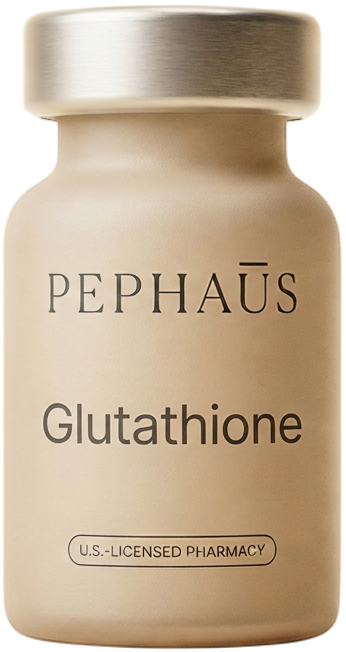
Glutathione comes up constantly in skin and beauty conversations, sometimes with claims that run far ahead of the evidence. Here is a grounded look at what glutathione is, the biology behind the skin interest, and an honest line on what is and is not proven.
Is this you?
Sound familiar?
Your skin looks tired and you want it clear and bright again.
You want a glow that shows up in photos.
You feel run down and want to feel fresh again.
You want real support for your body's own detox pathways.
You want a prescription from a physician, not a gummy.
You want it shipped to your door with nothing to schedule.
If you nodded at two or three of those, this was built for you. Keep going.
What glutathione is
Glutathione is often called the body's master antioxidant. It is produced naturally in your cells and plays a central role in neutralizing oxidative stress and supporting your body's detoxification processes. It is not an exotic compound. It is a workhorse molecule your cells rely on every day. Our deeper piece on what glutathione does in the body covers its broader role.
Why it gets connected to skin
The skin interest comes from glutathione's antioxidant role. Oxidative stress is one of the factors involved in skin aging and dullness, so the reasoning is that supporting antioxidant capacity may support skin health. There is also discussion of glutathione's relationship to melanin, the pigment that gives skin its color, which is where a lot of the brightness claims originate.
Here is the honest part. The biology is real, but the human evidence for glutathione producing dramatic, reliable skin changes is limited and mixed. Some people report a difference in how their skin looks or feels. Others do not. We will not promise a specific cosmetic outcome, because the evidence does not support guarantees.
Ready when you are. Ten minutes on your phone.
Start my online visitHow it is delivered
Glutathione is not absorbed especially well when taken by mouth, which is why injectable forms are commonly discussed. As an injection, glutathione is prepared by a licensed compounding pharmacy and prescribed after a U.S.-licensed provider reviews your history. Like other compounded medications, it is not an FDA-approved finished product, and a provider explains what that means. Each batch ships with a Certificate of Analysis showing purity and concentration.
What to actually expect
Treat glutathione as a supportive antioxidant approach, not a guaranteed skin transformation. If you go in expecting a dramatic change, you may be disappointed, and that is the honest framing. If you go in curious about supporting your body's antioxidant capacity, with realistic expectations, you are thinking about it the right way. A provider can help you decide whether it fits your goals, which is the point of our anti-aging program.
Pricing
Cost and the program
Glutathione programs are cash-pay, which means a flat price set up front with no insurance billing. The price covers the provider visit, the medication from a licensed pharmacy, shipping, and ongoing support through a client portal. If a provider decides glutathione is not appropriate for you, you are not charged for medication.
Pricing in your door
One price. Provider visit, medication and shipping included.
- First month$99
- 3-month plan$94/mo
- 6-month plan$89/mo
- Provider visit
- Medication
- Cold shipping to your door
- Refills on a schedule
- Care team messaging
- Cancel anytime online
The bottom line
Glutathione is a real and important antioxidant, and the interest in it for skin is rooted in genuine biology. The honest caveat is that the human evidence for dramatic skin results is limited, so realistic expectations matter. If you are curious, a provider conversation is the right next step. See our how it works page or start a visit.
Oxidative stress and aging skin
To understand the skin interest, it helps to understand oxidative stress. Your cells generate reactive molecules as a normal part of living, and over time these can contribute to wear on tissues, including skin. Antioxidants are the counterweight, and glutathione is one of the most important your body makes. The idea behind using it for skin is that supporting antioxidant capacity may help offset some of the oxidative load that plays a role in dullness and aging.
That reasoning is sound as far as it goes. The honest qualifier is that skin aging has many drivers, sun exposure and genetics chief among them, and an antioxidant is one factor rather than a master switch. Supporting your antioxidant capacity is a reasonable goal. Expecting it to single-handedly reverse skin aging is not.
A realistic way to think about results
The most useful mindset is patience paired with realism. If glutathione helps how your skin looks or feels, that tends to be a gradual, modest effect rather than a sudden transformation, and it varies a great deal from person to person. Some notice a difference. Some do not. Neither outcome means the approach is working or failing, because the individual variation is real and the human evidence is limited.
Pairing it with the basics that actually move skin health, like sun protection, hydration, and sleep, makes more sense than treating glutathione as a standalone fix. Approached that way, with a provider helping you keep expectations grounded, it can be a reasonable thing to explore. Approached as a guaranteed brightening cure, it will likely disappoint.
Pairing it with the basics
Glutathione makes the most sense as one supportive piece of a broader approach to skin health, not a standalone fix. The factors that reliably affect how skin ages, like consistent sun protection, hydration, and sleep, do the heavy lifting. Thought of that way, an antioxidant approach is a reasonable addition for people who want to support their skin from the inside, with realistic expectations and a provider keeping the framing honest. Thought of as a replacement for the basics, it is likely to underwhelm.
FAQ
Frequently asked questions
Does glutathione actually brighten skin?+
The biology behind the claim is real, but the human evidence for dramatic, reliable skin changes is limited and mixed. Some people report a difference, others do not. We will not promise a specific cosmetic result, because the evidence does not support guarantees.
Why is glutathione given as an injection?+
Glutathione is not absorbed especially well by mouth, which is why injectable forms are commonly used. The injection is prepared by a licensed compounding pharmacy and prescribed after a provider reviews your history.
Is glutathione safe?+
Glutathione is produced naturally in your body. As a compounded injectable, its safety rests on a licensed prescriber, a licensed pharmacy, and per-batch testing you can see. A provider reviews whether it is appropriate for you before prescribing.
Is it FDA-approved?+
Compounded glutathione is not an FDA-approved finished product. It is prepared by a licensed pharmacy to fill a prescription, and a provider reviews whether it fits you first.
Start your visit from your phone
Ten minutes on your phone. A physician licensed in your state. A box on your porch in 2 to 3 business days.
See if you qualifyYour care team
Every PepHaus visit is reviewed by a licensed physician from the Wasef Health Group provider network. A doctor reads your intake, decides if treatment fits, and sets your plan.
Meet the physiciansThis article is educational and is not medical advice. Compounded medications are not FDA-approved. Treatment requires evaluation by a licensed provider.